





What's Happening?
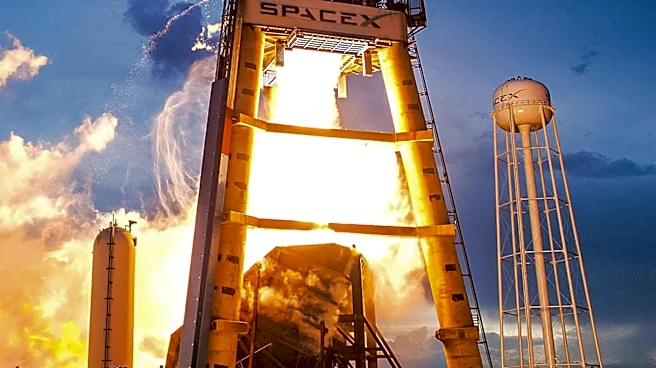
SpaceX has successfully conducted the first static fire test of Ship 40, the upper stage of its Starship rocket, at Starbase, Texas. This marks a significant step towards the upcoming Flight 13 mission. The test involved igniting one of the spacecraft's
central Raptor 3 engines for approximately 15 seconds, allowing engineers to verify engine performance. Ship 40 is equipped with six Raptor 3 engines, three optimized for atmospheric flight and three for space operations. This test is part of SpaceX's ongoing efforts to refine its fully reusable rocket system.
Why It's Important?
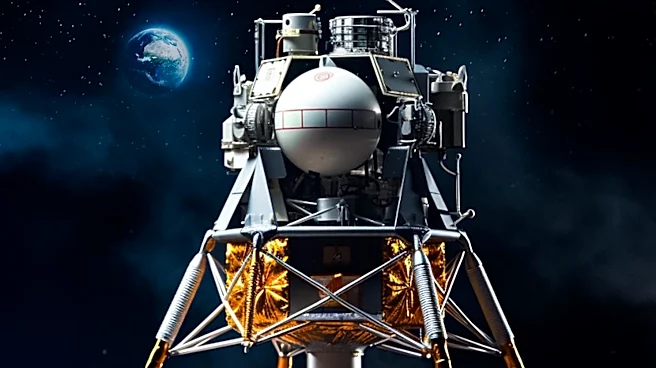
The successful static fire test is crucial for SpaceX's plans to support NASA's Artemis program, which aims to return humans to the Moon. The Starship's ability to perform orbital refueling is essential for missions beyond low Earth orbit, enabling longer and more sustainable space exploration. This capability is vital for NASA's lunar missions, as the Starship will serve as the Human Landing System for transporting astronauts to the Moon's surface. Each successful test brings SpaceX closer to achieving these ambitious goals.
What's Next?
SpaceX will continue testing Ship 40, including additional static fires involving all six engines, before it is cleared for flight. The company aims to demonstrate orbital refueling capabilities, a critical component for future deep space missions. As SpaceX progresses with its testing, it will gather valuable data to refine the Starship's design and performance. The outcome of these tests will influence the timeline and success of NASA's Artemis missions, with the lunar landing version of Starship requiring multiple tanker launches for refueling.