






What's Happening?
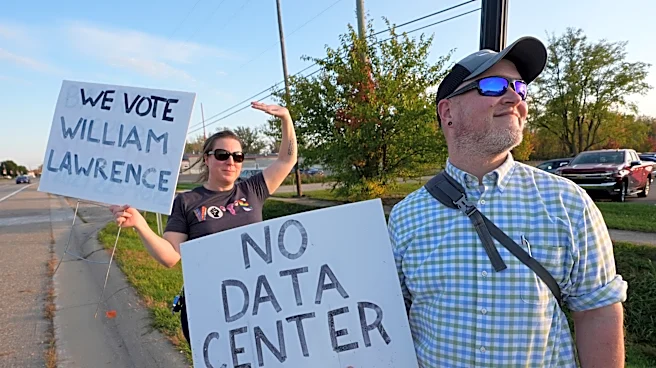
Residents of Harwood, North Dakota, a town with a population of 845, have voted against a ballot measure that would have mandated independent reviews and public hearings for large industrial projects. This decision effectively paves the way for the construction
of a $3 billion, 1.8-million-square-foot data center on the town's outskirts. The measure failed by a margin of approximately 3-to-1, contrasting sharply with national trends where 76% of voters expressed opposition to new data centers in their communities, according to national exit polls. Harwood's mayor advocated for the project, citing its inevitability and the potential for $1.65 million in annual property taxes and around 200 new jobs for the town. Opponents raised concerns about environmental risks, noise pollution, and future cleanup costs, but their arguments were ultimately outvoted. This outcome makes Harwood an outlier, as it appears to be the only community nationwide where a ballot measure concerning data centers passed favorably for such developments.
Why It's Important?
This decision in Harwood is significant because it defies a growing national sentiment against the proliferation of data centers. While many communities are pushing back due to concerns over environmental impact, resource consumption (especially water and energy), noise, and the strain on local infrastructure, Harwood has embraced the development. This divergence highlights varying local priorities and economic pressures. For Harwood, the promise of substantial annual property tax revenue and job creation appears to have outweighed potential drawbacks. This could set a precedent for other small towns in economically developing regions, demonstrating that significant industrial projects can be approved if local leadership effectively articulates the economic benefits. Conversely, it also underscores the challenges faced by environmental advocates in communities where economic incentives are particularly compelling. The project's approval could also attract further tech investment to North Dakota, positioning the state as a more data-center-friendly location compared to other states with stricter regulations.
Beyond the Headlines
The Harwood decision reflects a complex interplay between local economic development needs and broader environmental and community concerns. While the immediate benefit for Harwood is projected to be substantial tax revenue and job creation, the long-term implications warrant closer examination. The environmental impact, particularly regarding energy consumption and potential water usage for cooling, could become a more prominent issue as the data center operates. The 'inevitability' argument put forth by the mayor suggests a pragmatic approach to development, where communities might feel compelled to accept projects to capture economic benefits rather than risk them going to a neighboring area. This raises questions about regional planning and how communities can collectively address the siting of large-scale industrial facilities. Furthermore, the national trend of opposition, coupled with Harwood's unique outcome, indicates a growing public debate about the societal costs and benefits of the digital infrastructure that underpins modern life, including the rapid expansion of artificial intelligence technologies.