






What's Happening?
Co-working spaces in the U.S. are undergoing a significant rebranding, moving away from their traditional open-plan, casual environments to offer more elegant and sophisticated amenities. Companies like WeWork are eliminating open floor plans and beer
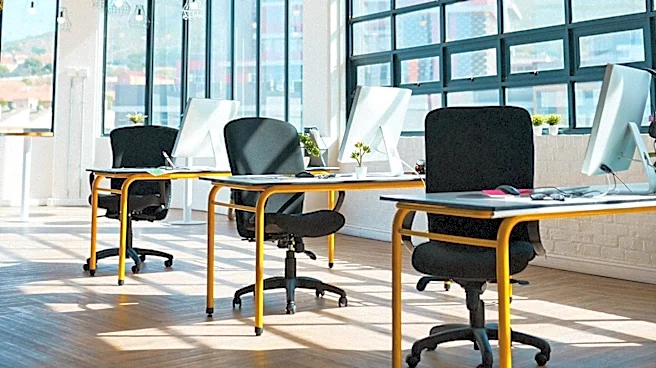
on tap, instead focusing on private offices, conference rooms, and private floors. Thiago Viana, head of communications at WeWork, stated that their spaces are now 'elegant and sophisticated.' This shift is driven by a demand for 'ready-to-go offices,' swing spaces, and short-term workplaces, particularly from new artificial intelligence and finance companies uncertain about future growth. An analysis by Yardi, a real estate data and analytics firm, found 132 co-working spots in the metro area offering at least three high-end amenities. Adam Stark, CEO of Stark Office Suites, noted a demand for more upscale options, leading his company to launch the 'Excelsior' brand with locations featuring private offices, executive lounges, and conference facilities, with introductory rates ranging from $5,000 to $17,500 per month.
Why It's Important?
This evolution in co-working spaces reflects a broader change in the U.S. commercial real estate market and the nature of work itself. The demand for high-end, flexible office solutions indicates that businesses, especially in tech and finance, are seeking more adaptable and premium environments for their employees. This trend could lead to a revitalization of urban office spaces, as companies opt for flexible leases rather than long-term commitments. For the U.S. economy, this means increased investment in office infrastructure and a potential boost for related service industries. It also signifies a shift in employee expectations, with a greater emphasis on privacy, comfort, and professional amenities in their workspaces. Landlords and developers who adapt to this demand for upscale co-working options stand to gain significantly, while traditional office models may face challenges.
What's Next?
The trend towards upscale co-working spaces is expected to continue, with more providers investing in premium amenities and private office solutions. WeWork plans to open new high-level, state-of-the-art spaces, including an even more upscale version at 511 Fifth Ave. Stark Office Suites' 'Excelsior' brand, which quickly filled its private offices, will likely expand its offerings. Other co-working companies are expected to follow suit, creating a more competitive market for high-end flexible workspaces. This could lead to further innovation in office design, technology integration, and hospitality services within co-working environments. Businesses will have more choices for flexible, premium office solutions, potentially influencing their long-term real estate strategies and fostering a more dynamic work culture.
Beyond the Headlines
The rebranding of co-working spaces touches upon deeper societal and psychological aspects of work. The move away from open-plan offices suggests a re-evaluation of productivity and well-being, with a renewed emphasis on privacy and focused work environments. The inclusion of high-end amenities and hospitality-infused services blurs the lines between work and luxury, potentially elevating the daily work experience. This shift could also reflect a desire for a more professional and established image for businesses operating in flexible spaces, moving beyond the 'startup' stereotype. Ethically, it raises questions about accessibility and equity in the workplace, as premium co-working spaces might cater to a specific demographic, potentially widening the gap between different types of workers. Culturally, it signifies a maturation of the co-working concept, adapting to the evolving needs and preferences of a diverse professional landscape.