






What's Happening?
Apollo Silver Corp, a TSX-V-listed company, has announced positive results from a preliminary economic assessment (PEA) for its Calico silver project in California. The PEA estimates an after-tax net present value (NPV) of $737 million, an after-tax internal
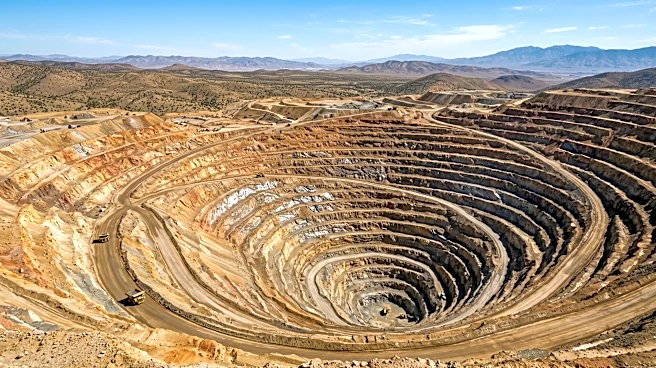
rate of return of 25%, and a payback period of three years. This assessment is based on developing an open-pit mining operation at the Waterloo deposit, which would feed a conventional 8,000 tonnes per day (t/d) milling and cyanidation leach plant. The initial planned processing life for this operation is approximately 15 years. According to Apollo president and CEO Colin Sutherland, the Waterloo deposit alone is projected to support a 15-year operation, producing about five million ounces of silver annually. The capital cost for the project is estimated at $715.16 million, with construction anticipated to take two years.
Why It's Important?
This positive PEA is significant for the U.S. mining sector, particularly as silver has been added to the U.S. List of Critical Minerals. The development of a substantial silver mine in California could enhance domestic supply chains for critical minerals, reducing reliance on foreign sources. The project's estimated annual production of five million ounces of silver would contribute significantly to the U.S. economy and potentially create numerous jobs in the region. Furthermore, the project's location on private land with vested surface mining rights and its plan to produce doré in the U.S. align with national efforts to bolster domestic resource production and processing. The financial metrics, including a high NPV and internal rate of return, suggest a robust and economically viable project, which could attract further investment into the U.S. mining industry.
What's Next?
Apollo Silver's immediate focus is on de-risking the project. This involves conducting further studies on water, power, and capital inputs. The company is also progressing towards a pre-feasibility study, which will provide a more detailed analysis of the project's technical and economic viability. The current PEA does not yet incorporate the 49 million inferred ounces from the Langtry deposit, indicating potential for future expansion and increased resource estimates. Successful completion of these next steps could pave the way for securing necessary permits and financing, ultimately leading to the construction and operation of the mine. The project's advancement could also encourage other mining companies to explore and develop critical mineral resources within the U.S.
Beyond the Headlines
The Calico silver project's development highlights a broader trend of renewed interest in domestic critical mineral production within the U.S. The designation of silver as a critical mineral underscores its importance in various high-tech and industrial applications, including electronics, renewable energy technologies, and defense. This project could serve as a model for how the U.S. can leverage its own natural resources to meet strategic economic and national security objectives. The emphasis on producing doré in the U.S. also points to a desire for greater domestic control over the entire mineral value chain, from extraction to initial processing. This could lead to a more resilient and secure supply of essential materials, reducing vulnerabilities to global market fluctuations and geopolitical risks.