

What's Happening?
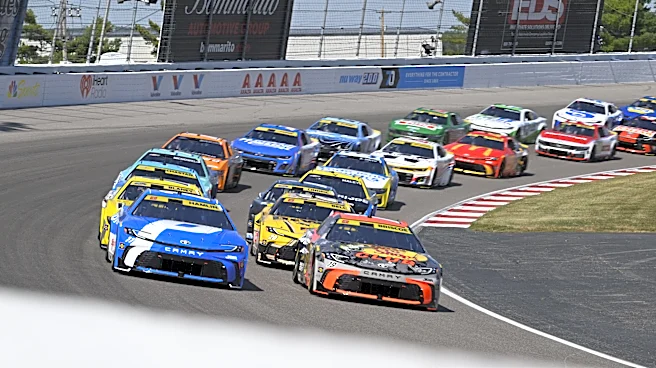
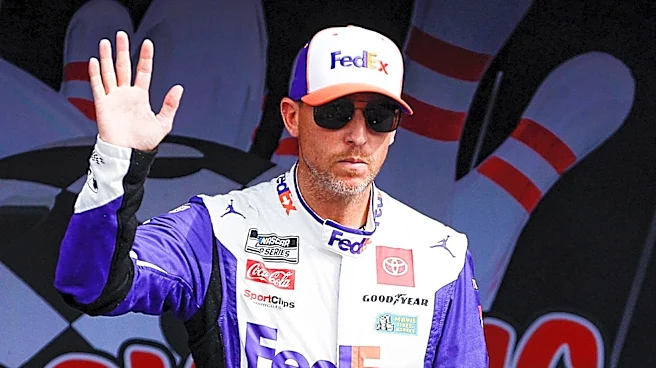
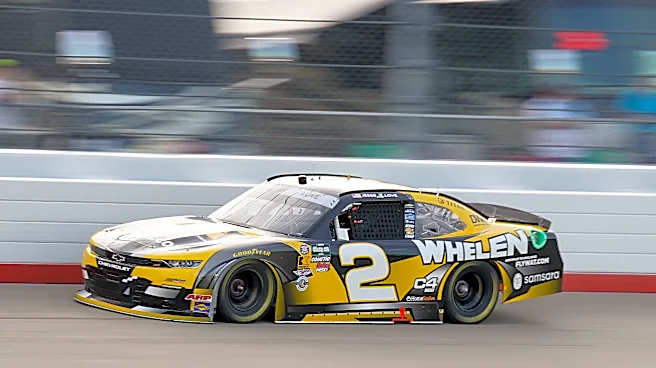
Denny Hamlin has publicly defended NASCAR's long-standing self-policing culture following a recent on-track feud between Corey Day and William Sawalich at Gateway. Hamlin, a Joe Gibbs Racing driver, supported Sawalich's retaliation against Day, arguing
that Day had been involved in multiple incidents throughout the year. The feud at Gateway saw Day slide into Sawalich's Toyota, leading Sawalich to retaliate with a door slam. Hamlin stated on his 'Actions Detrimental' podcast that NASCAR should allow drivers to police themselves and that penalties should focus on the action rather than just the result. He emphasized that drivers can only tolerate so much and need to send messages back, criticizing Day for a 'total lack of awareness' and not giving Sawalich enough room.
Why It's Important?
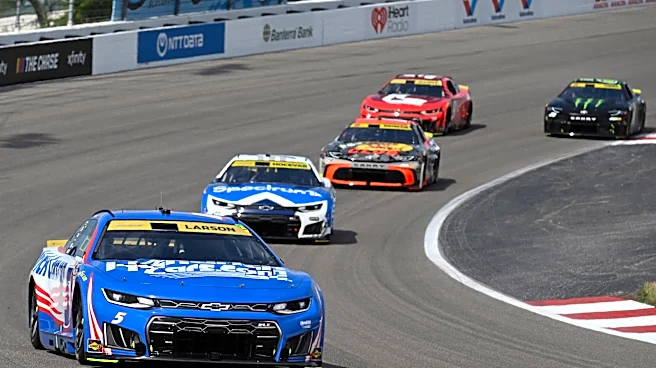
Hamlin's defense of NASCAR's self-policing culture highlights a significant aspect of the sport's unwritten rules and driver dynamics. This culture, where drivers often resolve on-track grievances among themselves, can lead to intense rivalries and dramatic moments that engage fans. However, it also raises questions about safety and the potential for escalating conflicts. The incident between Day and Sawalich, and Hamlin's subsequent comments, underscore the delicate balance NASCAR must strike between allowing competitive aggression and ensuring driver safety. For the sport, this self-policing can be a double-edged sword: it adds a raw, authentic element to racing but also carries risks of dangerous retaliatory actions. Hamlin's stance, coming from a veteran driver, reinforces the traditional view within the racing community that some level of driver-to-driver accountability is an inherent part of the sport.
What's Next?
The ongoing debate about self-policing in NASCAR, fueled by incidents like the Day-Sawalich feud and Hamlin's comments, will likely continue to be a point of discussion among drivers, teams, and NASCAR officials. While Hamlin advocates for allowing drivers to police themselves, NASCAR's leadership may face pressure to intervene more decisively in cases of perceived excessive retaliation to maintain safety standards and prevent dangerous escalations. The outcome of such feuds and the league's response will shape future driver behavior and the interpretation of what constitutes acceptable on-track conduct. This dynamic will influence how future incidents are handled, potentially leading to clearer guidelines or more stringent penalties if self-policing is deemed to cross a line into unsafe practices. The balance between tradition and modern safety concerns will remain a key challenge for the sport.
Beyond the Headlines
The concept of 'self-policing' in NASCAR reflects a broader cultural aspect of competitive sports where athletes often feel a need to enforce unwritten rules of conduct. This goes beyond official regulations and taps into a sense of honor, respect, and accountability among competitors. In a high-stakes, high-speed environment like NASCAR, these unwritten rules can be particularly potent. Hamlin's comments reveal a generational perspective within the sport, where veteran drivers might view such actions as a necessary part of maintaining order and deterring overly aggressive driving. However, this also raises ethical considerations about vigilante justice versus centralized authority in sports governance. The tension between these two approaches—driver autonomy versus league control—is a recurring theme in many professional sports and speaks to the complex interplay of tradition, safety, and entertainment value.