




What's Happening?
Volkswagen AG Pref (XETR:VOW) has reaffirmed its 2030 targets, aiming for approximately nine million vehicle sales and a 9% profit margin. Simultaneously, the company plans to reduce its annual production capacity to nine million vehicles and implement
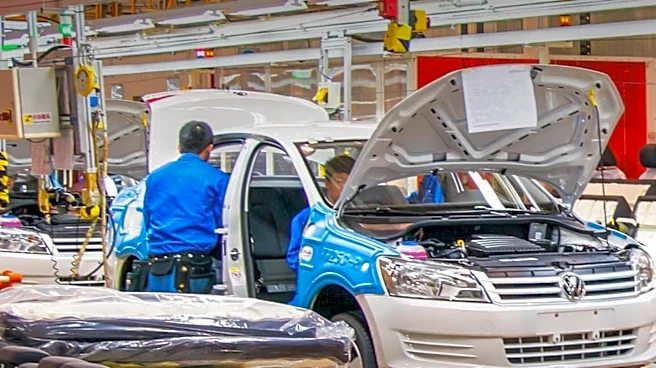
significant workforce reductions, targeting 100,000 job cuts worldwide by 2030. This includes an agreement with unions to eliminate an additional 50,000 positions. The company is also considering the closure of four plants—Hannover, Emden, Zwickau, and Neckarsulm—beyond the next decade, as it cannot guarantee their future. These strategic adjustments come as Volkswagen faces challenges such as a more than 30% decline in sales in China during the first nine months of the year, although it achieved record sales of 28,000 new-energy vehicles in China in October, a fourfold increase from the previous year.
Why It's Important?
Volkswagen's reaffirmed 2030 targets, coupled with planned production capacity cuts and substantial job reductions, signal a major strategic overhaul aimed at enhancing profitability and efficiency in a highly competitive global automotive market. The pursuit of a 9% profit margin, a level not previously achieved by the company, underscores a strong commitment to financial performance. The decision to cut 100,000 jobs globally by 2030 reflects the ongoing industry trend towards automation, digitalization, and the shift to electric vehicle production, which often requires different skill sets and fewer manual labor inputs. The potential closure of four plants highlights the intense pressure on automakers to optimize their manufacturing footprint and adapt to evolving market demands, particularly in the transition to electric vehicles. These actions will have significant economic and social impacts on the regions where these plants are located and on the broader automotive supply chain.
What's Next?
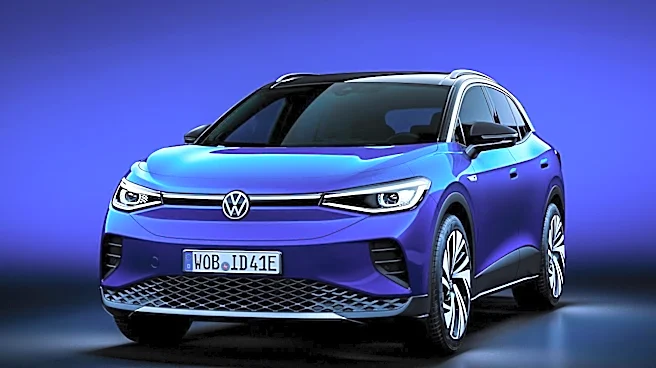
Volkswagen plans to invest hundreds of billions in research and development, technology, and competitiveness in the coming years, while also streamlining its portfolio by cutting approximately one-third of its businesses and holdings. The company is actively reviewing the future of its plants, such as Emden, where ID. Tiguan production has begun, but competitive successor models are not guaranteed beyond 2031-2034. Lower Saxony CDU leader Sebastian Lechner has proposed a pact involving owners, management, and labor to protect Volkswagen sites and reduce costs, suggesting potential collaborative efforts to navigate these changes. Volkswagen's strategy to use China as an export hub and its plan to introduce 30 new models by 2029, particularly in the new-energy vehicle segment, will be critical for its future growth and market positioning.
Beyond the Headlines
The extensive restructuring at Volkswagen reflects the profound transformation occurring across the global automotive industry, driven by electrification, digitalization, and sustainability imperatives. The balance between achieving ambitious financial targets and managing the social impact of job cuts and plant closures will be a critical challenge for the company and its stakeholders. This situation could set a precedent for how other major automakers address similar pressures, potentially influencing labor relations, government policies, and regional economic development strategies. The focus on new-energy vehicles and using China as an export hub also underscores the shifting geopolitical and economic landscape, where global manufacturing and sales strategies are increasingly intertwined with regional market dynamics and technological advancements.