




What's Happening?
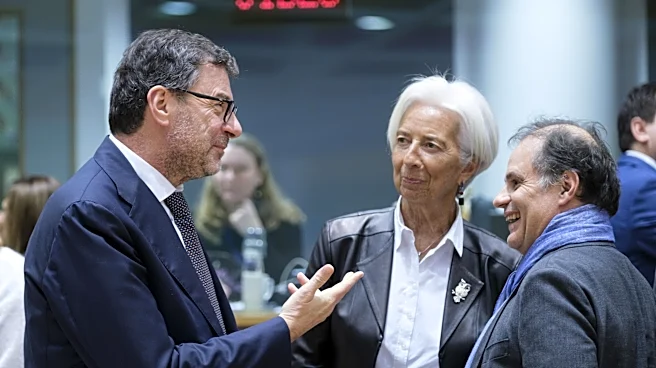
European Central Bank (ECB) Vice President Boris Vujcic and Governing Council member Martin Kocher have indicated that further monetary policy tightening will likely be necessary. Their statements, made on November 27, 2026, come as inflation in the 21-nation
euro area remains double the ECB's 2% target. Vujcic noted that market expectations for a December interest-rate hike are likely to be accurate, assuming no unforeseen events. Kocher emphasized the Governing Council's firm focus on achieving the medium-term inflation target of 2% and highlighted the need to be prepared for potential 'second-round effects' if high energy prices persist. The officials underscored the importance of proactive monetary policy decisions to prevent being overtaken by economic developments. They also discussed the resilience of the euro area economy, which has shown stronger growth than anticipated, and the ongoing demand for the ECB's EUREP 2.0 program, indicating international interest in the euro as a stable currency.
Why It's Important?
The signals from ECB officials regarding further monetary tightening are crucial for the stability of the euro area economy and have broader implications for global financial markets. Persistent inflation, currently double the ECB's target, erodes purchasing power and can lead to economic instability. By tightening monetary policy, the ECB aims to curb inflation, but this also carries the risk of slowing economic growth. The emphasis on proactive measures suggests the ECB is determined to avoid a prolonged period of high inflation, which could have severe long-term consequences for businesses and consumers. The stability of the euro, as highlighted by the demand for the EUREP 2.0 program, is vital for international trade and investment, particularly for countries within the euro area. The potential for 'second-round effects' from energy prices indicates a complex challenge, as these effects can embed inflation more deeply into the economy, making it harder to control. The ECB's actions will influence borrowing costs, investment decisions, and overall economic sentiment across Europe and beyond.
What's Next?
The market's expectation of a December interest-rate hike, acknowledged by Vice President Vujcic, suggests that the next ECB monetary policy meeting will likely result in further tightening. The Governing Council's commitment to the 2% inflation target indicates that the ECB will continue to monitor economic data closely and adjust its policies as needed. Future actions will depend on the evolution of inflation, energy prices, and overall economic growth in the euro area. The ECB will also need to consider the potential impact of its policies on individual member states, particularly those facing budget problems, as discussed in relation to France. The ongoing demand for the EUREP 2.0 program and the international interest in the euro suggest that the ECB's efforts to maintain currency stability are being recognized. The nomination of Pablo Hernández de Cos as the new ECB President, pending formal steps, signals a continuation of experienced leadership focused on monetary policy expertise and international experience.
Beyond the Headlines
The ECB's current stance reflects a broader global challenge of managing inflation in a volatile economic environment. The discussion about the digital euro highlights the evolving landscape of financial technology and the central bank's role in maintaining strategic autonomy in digital payments. The push for a genuinely European digital payment method, independent of dominant international systems like Mastercard and Visa, underscores geopolitical considerations and the desire for greater financial sovereignty. Furthermore, the officials' comments on the banking sector's improved condition and the need for cross-border mergers point to a long-term vision for a more resilient and integrated European financial system. This integration aims to diversify risk and reduce the vulnerability of banks to the sovereign debt of their home countries, a lesson learned from past crises. The emphasis on structural reforms to increase Europe's potential growth, particularly in areas like artificial intelligence, indicates a recognition of the need for innovation to compete on a global scale.