







What's Happening?
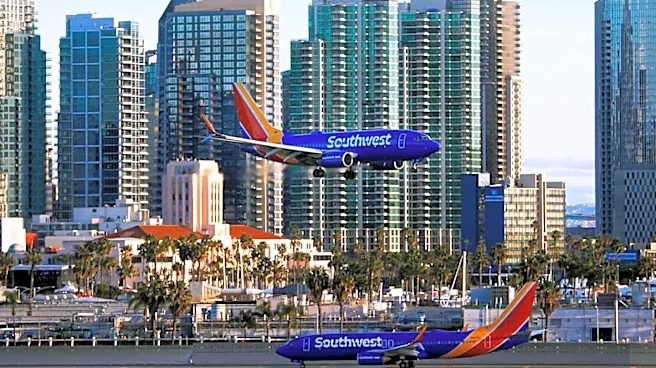
The Prix Versailles, an esteemed series of architectural competitions, has recognized San Diego International Airport's Terminal 1 and Pittsburgh International Airport as two of the world's most beautiful airports for 2026. The awards highlight airports that
exhibit extraordinary architecture with a focus on sustainability and efficiency. San Diego's Terminal 1 was praised for its innovative design that reduces carbon emissions and enhances transportation and parking efficiency. The terminal features a 244-meter curved glass structure that floods the space with natural light, reflecting the city's climate and regional identity. Pittsburgh International Airport, designed by Luis Vidal Architects, was noted for its nature-inspired design, featuring canopy-style arches and tree-shaped columns that emulate the nearby Allegheny Mountains. The airport's design includes four outdoor terraces and a 'Petal Tunnel' inspired by the Fort Pitt Tunnel.
Why It's Important?
The recognition of these U.S. airports underscores the growing importance of sustainable and efficient design in modern infrastructure. By reducing carbon footprints and enhancing passenger experience, these airports set a benchmark for future developments in the aviation industry. The awards highlight the potential for architectural innovation to contribute to environmental goals, aligning with broader societal shifts towards sustainability. For the U.S., this recognition not only boosts the reputation of these airports but also emphasizes the country's commitment to integrating eco-friendly practices in public infrastructure. This could influence future airport designs and renovations across the nation, encouraging a focus on sustainability and efficiency.
What's Next?
Following this recognition, other airports may seek to emulate the successful design strategies of San Diego and Pittsburgh. This could lead to increased investment in sustainable architecture and technology in the aviation sector. Stakeholders, including airport authorities and city planners, might prioritize projects that align with these principles, potentially leading to policy changes that support green infrastructure. Additionally, the recognition could attract more travelers to these airports, boosting local economies and encouraging further development in surrounding areas.
Beyond the Headlines
The emphasis on sustainable design in airport architecture reflects a broader cultural shift towards environmental responsibility. As public awareness of climate change grows, there is increasing pressure on industries to adopt eco-friendly practices. This trend is likely to continue, influencing not only airport design but also other public infrastructure projects. The integration of natural elements and efficient design in airports could inspire similar approaches in urban planning and development, promoting a more harmonious relationship between built environments and nature.