




What's Happening?
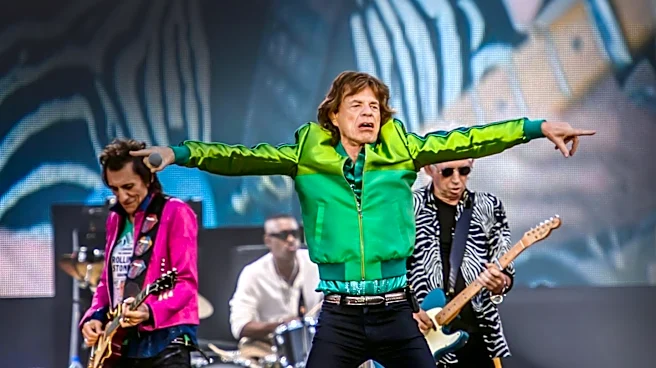
Mick Jagger was initially cast in Werner Herzog's film 'Fitzcarraldo,' portraying the assistant to Jason Robards' character, Brian Sweeney Fitzgerald. Early footage from the production, documented in 'My Best Fiend,' shows Jagger in this role. However,
the film faced significant financial and production difficulties, including Herzog's struggles with the Peruvian government. These challenges ultimately led to Jagger's withdrawal from the project to prepare for a world tour with The Rolling Stones. Concurrently, Jason Robards fell ill, and when his doctors prevented his return to the set, Herzog replaced him with Klaus Kinski. Jagger's role was subsequently removed entirely from the script. Herzog later expressed regret over Jagger's departure, stating in an interview with Germany's The Local that Jagger's potential as a great actor has not been sufficiently recognized.
Why It's Important?
The near-casting of Mick Jagger in 'Fitzcarraldo' highlights the unpredictable and often arduous nature of film production, particularly for ambitious projects like Herzog's. Jagger's decision to prioritize his music career over a demanding film shoot underscores the significant commitment required for such roles and the potential conflicts artists face when balancing different creative endeavors. The film's troubled production, which included the manual hauling of a 320-ton steamship up a hill, became legendary and was chronicled in the documentary 'Burden of Dreams.' This event is significant in cinema history as it cemented Herzog's reputation as a controversial director known for pushing boundaries and enduring extreme conditions to realize his artistic vision. The involvement of a global music icon like Jagger, even briefly, adds a unique footnote to the film's already storied legacy, illustrating the intersection of music and film industries and the personal sacrifices involved in high-stakes artistic ventures.
What's Next?
While Mick Jagger's involvement in 'Fitzcarraldo' is a historical footnote, the film itself remains a classic, continuing to be studied and appreciated for its artistic merit and the extraordinary circumstances of its creation. The documentary 'Burden of Dreams' ensures that the challenges faced during production, including the near-fatal conflicts between Herzog and Klaus Kinski, remain a subject of discussion in film circles. For Werner Herzog, his reputation for intense and unconventional filmmaking persisted, influencing subsequent generations of directors. The incident also serves as a cautionary tale about the complexities of large-scale international film productions and the delicate balance between artistic vision and practical realities. Future analyses of Herzog's work or the history of challenging film shoots will likely continue to reference the 'Fitzcarraldo' production and the notable figures, like Jagger, who were almost part of its narrative.
Beyond the Headlines
The 'Fitzcarraldo' production, and Mick Jagger's near-involvement, delves into deeper themes of artistic obsession, the limits of human endurance, and the ethical considerations within filmmaking. Herzog's relentless pursuit of his vision, including the physically demanding feat of moving a steamship, raises questions about the cost of art and the potential exploitation of cast and crew. The alleged request from the Machiguenga tribe chief to kill Klaus Kinski, though rejected by Herzog, underscores the extreme tensions and cultural clashes that can arise during on-location shoots in remote areas. This episode highlights the fine line between creative genius and madness, and the profound psychological impact such productions can have on all involved. Jagger's 'fortunate' escape from the 'miserable' shoot, as described in the source, suggests a broader commentary on the personal well-being of artists versus the demands of their craft, and how some projects can become more about the struggle than the final product.