






What's Happening?
In San Francisco, immigrant chefs are using their culinary skills to preserve and celebrate their cultural heritage. Chef Heena Patel, co-owner and head chef at Besharam, an Indian restaurant, creates dishes that are deeply personal and autobiographical,
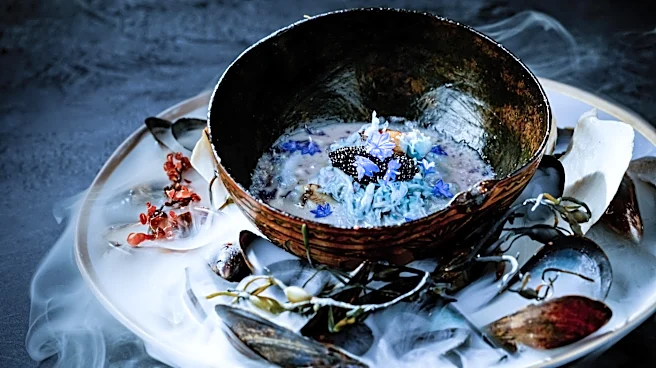
such as pakoras, which are a staple street food in Gujarat, India. These dishes evoke memories of her childhood and family traditions. Similarly, Monique An, who runs the Vietnamese restaurant Crustacean, continues her family's legacy by serving dishes that blend Vietnamese, Chinese, French, and Italian flavors. These chefs are not only preserving their cultural identities but also introducing them to a broader audience, challenging the notion of the 'melting pot' by maintaining distinct culinary traditions.
Why It's Important?
The efforts of these chefs highlight the importance of cultural preservation in the face of assimilation pressures. By maintaining and sharing their culinary traditions, they provide a richer, more diverse food culture in the U.S. This not only benefits the chefs and their communities by keeping their heritage alive but also enriches the broader American culinary landscape. The success of these restaurants demonstrates a growing appreciation for authentic and diverse food experiences, which can lead to greater cultural understanding and acceptance. Additionally, these chefs serve as role models for other immigrants, showing that it is possible to succeed in the U.S. while staying true to one's roots.
What's Next?
As these chefs continue to innovate and share their cultural dishes, they may inspire more immigrant chefs to bring their unique flavors to the American dining scene. This could lead to a broader acceptance and demand for diverse cuisines, encouraging more restaurants to explore and celebrate their cultural heritage. Additionally, organizations like La Cocina, which supports women chefs of color, may see increased interest and participation, further diversifying the culinary industry. The continued success of these chefs could also influence food critics and culinary awards to recognize and celebrate diverse culinary contributions more prominently.
Beyond the Headlines
The stories of these chefs also touch on broader themes of identity and belonging. For many immigrants, food is a powerful connection to their homeland and a way to express their identity in a new country. By sharing their culinary traditions, these chefs are not only preserving their culture but also creating spaces where others can experience and appreciate it. This can foster a sense of community and belonging among immigrants and their descendants, as well as promote cross-cultural understanding and dialogue. The culinary world, therefore, becomes a platform for cultural exchange and preservation.