








What's Happening?
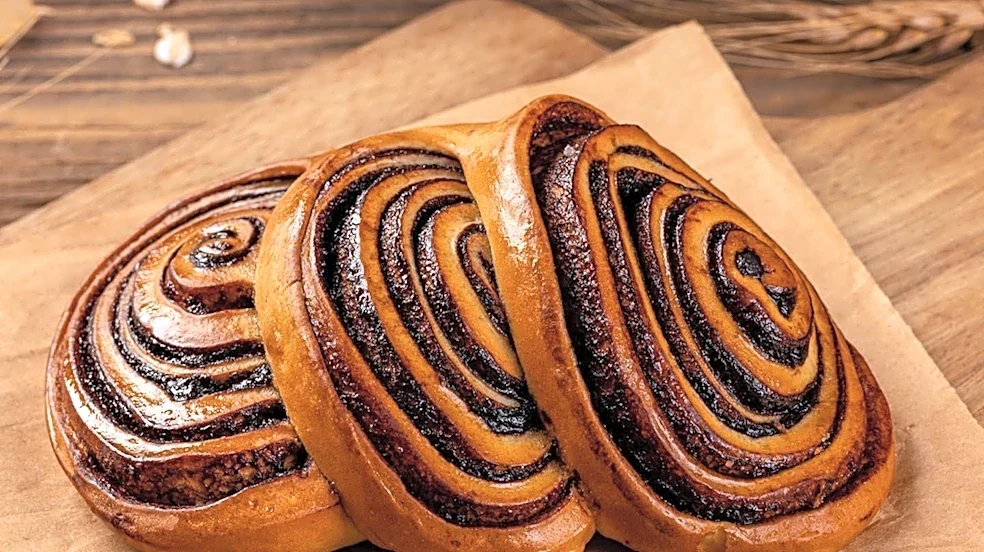
A new baking technique, dubbed the 'Cold Swirl Method,' has been developed to create chocolate swirl sourdough bread with a distinct, continuous ribbon of chocolate without the common issues of gummy lines or blurred swirls. Unlike traditional methods
where the filling is incorporated during initial shaping and proofs overnight, this new approach involves adding the chocolate filling only about twenty minutes before the loaf goes into the oven. The dough undergoes bulk fermentation and cold proofing plain, and then, just before baking, it is cut, filled with a dry mixture of Dutch process cocoa, granulated sugar, and cornstarch, and re-rolled. This timing prevents the sugar from pulling water from the dough during a long proof, ensuring a clean, sharp chocolate swirl and a well-structured crumb.
Why It's Important?
This innovation in sourdough baking is significant for home bakers and artisan bakeries alike. It addresses long-standing challenges in creating visually appealing and texturally consistent chocolate swirl breads, which often suffer from a compromised crumb due to the filling's interaction with the dough during extended proofing. By simplifying the process and improving the final product's quality, the 'Cold Swirl Method' can encourage more bakers to experiment with flavored sourdoughs. For the broader baking community, it represents a clever solution to a technical problem, potentially leading to new variations and applications of this method for other swirled bread types. The emphasis on specific ingredients like Dutch process cocoa and granulated sugar also highlights the importance of ingredient science in achieving desired baking outcomes.
What's Next?
Bakers adopting the 'Cold Swirl Method' will need to follow precise steps, including freezing the cold-proofed loaf for a short period to firm it up before cutting and filling. The recipe emphasizes using specific ingredients like Dutch process cocoa for color and flavor, and cornstarch to prevent the sugar from weeping. The method also suggests using two loaf pans for baking to achieve a tall, rectangular loaf with sandwich-style slices, mimicking the effect of a Dutch oven. Future developments might include adaptations of this method for other types of swirled breads or pastries, as well as further experimentation with different filling compositions to optimize texture and flavor.