









What's Happening?
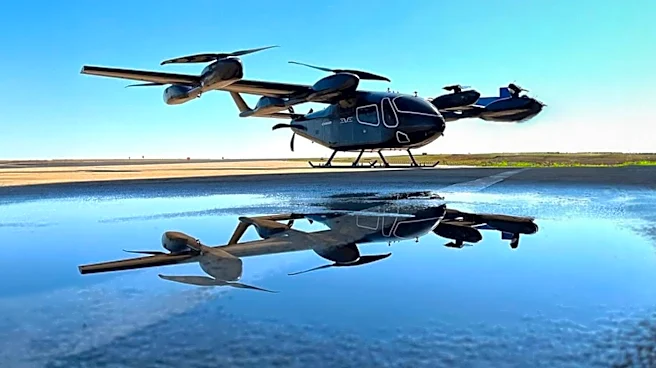
Eve Air Mobility has entered the next phase of flight testing for its eVTOL engineering prototype, following several months of preparatory groundwork. The prototype, which is battery-electric-powered, completed its hover phase in April and is now in the transition
phase, aiming for full wingborne flight by the end of the year. Eve has conducted 59 flights and logged 2.5 hours of flight time since the prototype's first flight in December 2025. The company targets local Brazilian certification and FAA and EASA validation of the Eve 100 in 2028. Eve has announced new letters of intent (LOIs) for its eVTOLs, including an order from Switzerland-based Moov for up to 30 eVTOLs and another from Shearwater Global Capital for up to 16 eVTOLs.
Why It's Important?
Eve Air Mobility's progress in eVTOL testing and the securing of new orders highlight the growing interest and investment in advanced air mobility (AAM). The development of eVTOLs represents a significant shift in urban transportation, offering potential solutions for congestion and connectivity challenges. The company's focus on tourism and regional connectivity, as well as the emergence of leasing and financing solutions, indicates a maturing market poised for expansion. The advancements in eVTOL technology could lead to new business models and opportunities in the aviation sector, potentially transforming how people and goods are transported in urban environments.
What's Next?
As Eve Air Mobility continues its testing and certification process, the company will likely focus on expanding its market presence and securing additional orders. The development of infrastructure to support eVTOL operations, such as vertiports and charging stations, will be crucial for the successful deployment of these aircraft. Regulatory bodies will play a key role in establishing safety and environmental standards for eVTOLs, influencing the pace of adoption. The collaboration between manufacturers, operators, and regulators will be essential in overcoming challenges and realizing the potential of advanced air mobility.