








What's Happening?
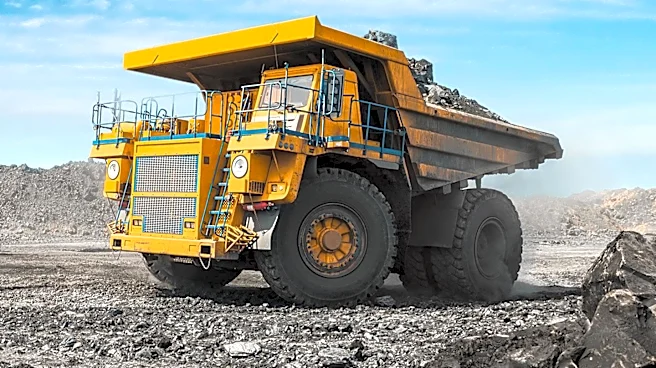
The mining industry is increasingly turning to renewable diesel as a viable alternative to traditional diesel fuel, aiming to reduce greenhouse gas emissions without compromising performance. Renewable diesel, also known as hydrotreated vegetable oil
(HVO), is gaining traction due to its compatibility with existing diesel engines and infrastructure. Major mining operations, such as Imperial Oil's Kearl Oil Sands and Rio Tinto's Kennecott mine, have successfully implemented renewable diesel in their fleets, demonstrating its effectiveness in maintaining power and performance. The global capacity for renewable diesel is projected to increase significantly, from 2,914 million gallons per year in 2020 to 9,407 million gallons per year by 2030, driven by regulatory pressures and corporate sustainability goals.
Why It's Important?
The shift towards renewable diesel is crucial for the mining industry, which faces significant pressure to reduce emissions. Diesel-powered fleets account for a substantial portion of the industry's carbon footprint, particularly in surface mining operations. By adopting renewable diesel, mining companies can achieve significant reductions in lifecycle greenhouse gas emissions, aligning with global net-zero targets set for 2050. This transition not only supports environmental goals but also ensures that mining operations can continue to meet productivity demands without the need for costly retrofits or infrastructure overhauls. The adoption of renewable diesel represents a practical step towards sustainable mining practices, offering a balance between environmental responsibility and operational efficiency.
What's Next?
As the mining industry continues to explore renewable diesel, site-specific pilot programs are essential to gather data on its performance and impact. These pilots will help operators understand the logistical and operational implications of switching to renewable diesel, including supply chain considerations and cost factors. Successful pilots could lead to broader adoption across the industry, supported by multi-year supply agreements that align with emission reduction timelines. Collaboration with fuel suppliers and industry specialists will be key to managing the transition smoothly, ensuring that renewable diesel can be integrated into existing operations without disruption.
Beyond the Headlines
The adoption of renewable diesel in mining could have broader implications beyond immediate emission reductions. It may influence regulatory frameworks and corporate strategies across other heavy industries, setting a precedent for sustainable fuel use. Additionally, the shift could drive innovation in fuel production and distribution, encouraging investment in renewable energy technologies. As more industries adopt similar practices, the cumulative impact on global emissions could be significant, contributing to broader climate change mitigation efforts.