



What's Happening?
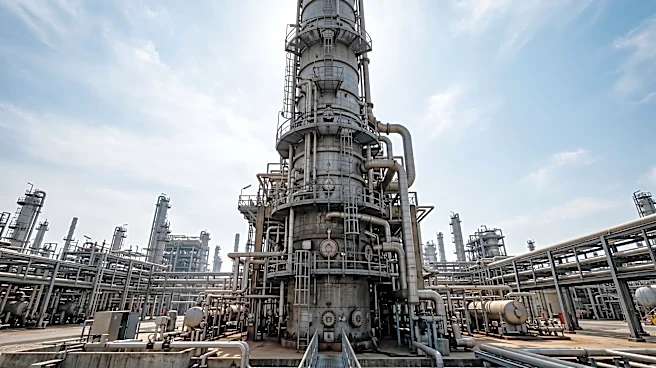
North American Blue Energy Partners (NABEP) has partnered with Sulzer, a Swiss engineering company, to rebuild a crucial crude tower at the Petrocedeño upgrader in Venezuela's Jose complex. This collaboration is a significant step towards restoring Venezuela's capacity
to process extra-heavy crude. Sulzer will manufacture and install a new tower, along with revamping preflash and vacuum towers, utilizing state-of-the-art separation technologies. The existing crude tower was severely damaged in November 2025, prior to NABEP taking over the facility. NABEP CEO Alejandro Betancourt emphasized that this project is part of a broader strategy to invest in lasting fixes and reactivate idle capacity across their Venezuelan operations, including replacing corroded pipelines and restarting furnaces. This initiative aims to maximize throughput, increase high-value product yields, and optimize performance and safety. NABEP's total production reached 223,509 barrels of oil equivalent per day on October 19, an increase from approximately 200,000 in August when it signed its U.S. agreement.
Why It's Important?
This partnership between NABEP and Sulzer is critical for the revitalization of Venezuela's oil industry, which has faced significant challenges in recent years. The Petrocedeño upgrader is vital for converting extra-heavy oil into lighter crude, making it usable by refineries. Restoring its full capacity will directly contribute to increasing Venezuela's oil output, which has implications for global energy markets and U.S. energy security. For NABEP, this investment underscores its commitment to long-term operations in Venezuela and its role in the country's 'oil renaissance.' The involvement of a respected international engineering firm like Sulzer brings advanced technology and expertise, ensuring high safety standards and operational efficiency. This development could attract further foreign investment into Venezuela's energy sector, signaling a potential shift towards greater stability and productivity. Increased Venezuelan oil production could also influence U.S. import strategies and reduce reliance on other oil-producing nations, thereby impacting geopolitical dynamics.
What's Next?
Sulzer will proceed with the manufacturing and installation of the new crude tower and the revamp of other critical towers at the Petrocedeño upgrader. This project is expected to significantly enhance the facility's ability to process extra-heavy crude, leading to increased throughput and higher yields of valuable products. NABEP will continue its broader efforts to rehabilitate and optimize its operations across the Orinoco Belt, focusing on replacing infrastructure and restarting other idle facilities. The success of this project will be a key indicator of Venezuela's progress in restoring its oil production capacity and attracting further international partnerships. The ongoing improvements in Venezuela's oil industry are likely to be closely monitored by global energy markets and U.S. policymakers, given their potential impact on oil supply and prices.
Beyond the Headlines
The rebuilding of the Petrocedeño upgrader by NABEP and Sulzer represents more than just an industrial project; it symbolizes a potential turning point for Venezuela's economic and political future. The 'oil renaissance' described by NABEP's CEO suggests a strategic effort to move beyond patching existing issues towards fundamental, lasting solutions. This approach could foster greater confidence among international investors, signaling a more stable and predictable operating environment in Venezuela. However, the reliance on foreign expertise and investment also highlights the deep-seated challenges within Venezuela's domestic industrial capabilities. Ethically, the renewed focus on heavy crude processing raises environmental concerns, particularly regarding the carbon footprint and potential ecological impacts of increased oil production. The long-term success of this 'renaissance' will depend not only on technological advancements but also on sustained political stability, transparent governance, and a commitment to environmental responsibility, all of which have been contentious issues in Venezuela's recent history.