










What's Happening?
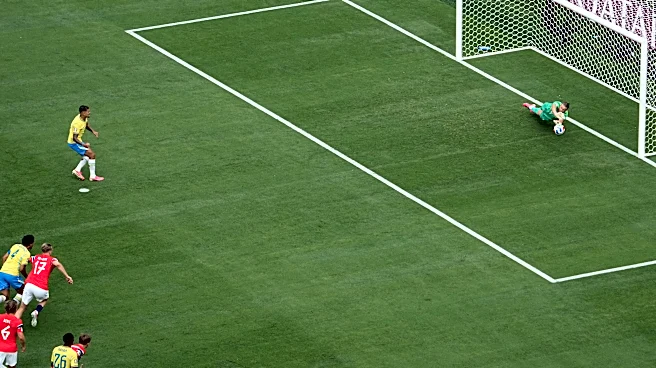
The stutter-step penalty kick, a technique in soccer where players feint and slow their run to deceive the goalkeeper, has become a divisive topic among fans and players. Originating from Brazil and popularized by legendary players like Pele, the move
is known as 'paradinha' or 'little stop' in Portuguese. Despite its historical roots and the flair it adds to the game, the technique has faced criticism, especially when players fail to execute it successfully. Recent high-profile misses by players like Kylian Mbappe and Bruno Guimaraes during the 2026 World Cup have reignited debates over its effectiveness and fairness. The technique, while allowing players to showcase their skill and creativity, often leads to controversy, with some arguing it gives an unfair advantage over goalkeepers.
Why It's Important?
The stutter-step penalty kick highlights the ongoing tension between innovation and tradition in sports. Its use in high-stakes matches like the World Cup underscores its potential impact on game outcomes, influencing team strategies and player reputations. For players, mastering this technique can enhance their scoring ability and marketability, while failures can lead to public scrutiny and criticism. For the sport, it raises questions about the balance between skill and sportsmanship, as well as the need for potential rule changes to ensure fair play. The debate over this technique reflects broader discussions in sports about the role of creativity versus regulation.
What's Next?
As the controversy around stutter-step penalties continues, soccer governing bodies may face pressure to review and possibly amend rules regarding penalty kicks. Players and coaches might also reconsider their approach to penalty-taking, weighing the risks and rewards of using such techniques in crucial moments. The ongoing discourse could lead to more standardized guidelines to ensure fairness and consistency in penalty execution. Additionally, the technique's future in the sport may depend on its success rate and acceptance by both players and fans.
Beyond the Headlines
The stutter-step penalty kick also touches on cultural aspects of soccer, reflecting the influence of Brazilian football on the global stage. It showcases how regional styles and innovations can permeate international play, contributing to the sport's evolution. The technique's divisive nature highlights the subjective nature of sports appreciation, where what is seen as skillful by some may be viewed as unsportsmanlike by others. This ongoing debate may influence how future generations of players are trained and how the sport is perceived by audiences worldwide.