



What's Happening?
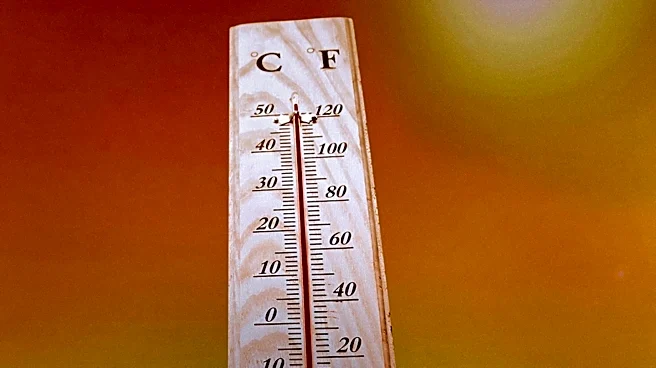
A new study published in Nature Communications by S. Xie, V. W. Xie, and X. Zhang reveals a direct link between extreme temperatures and the increased use of payday loans by low-income households. The research indicates that both unusually high and low temperatures can
trigger sudden financial emergencies, such as higher utility bills, unexpected repairs, or medical costs. These events, coupled with potential income loss for those in outdoor or irregular jobs, push financially vulnerable families towards high-cost, short-term borrowing. Payday loans, characterized by short repayment periods and high effective costs, serve as a critical indicator of financial distress that often goes unrecorded in conventional disaster statistics, which typically focus on hospital visits, excess deaths, or power demand.
Why It's Important?
This study highlights a previously under-recognized financial consequence of extreme weather, particularly for low-income households in the U.S. The findings underscore that the financial burden of climate change is not evenly distributed, disproportionately affecting those with limited savings, unstable employment, and inadequate housing. The reliance on payday loans creates a feedback loop where environmental stress leads to expensive debt, further eroding financial stability and making future emergencies even harder to manage. This insight is crucial for policymakers and financial institutions to understand the full scope of climate change's impact, moving beyond health and infrastructure to include household financial resilience. It suggests that current disaster response and climate adaptation strategies may be incomplete without addressing the financial vulnerabilities exacerbated by temperature extremes.
What's Next?
The research suggests a need for policy interventions that go beyond traditional public health measures to include financial protection for vulnerable populations. This could involve the implementation of adaptation policies such as cooling centers, energy assistance programs, resilient housing initiatives, and the promotion of affordable credit alternatives. Evaluating these policies not only as public health interventions but also as forms of financial protection will be critical. The study's findings may prompt a re-evaluation of how the social consequences of extreme weather are measured, encouraging the inclusion of financial distress indicators like payday loan usage in disaster statistics. This could lead to more holistic and effective strategies to support low-income households in the face of increasing temperature volatility.
Beyond the Headlines
The study delves into the less visible, yet profound, societal implications of climate change, revealing how environmental factors can exacerbate existing economic inequalities. The reliance on payday loans in response to temperature shocks exposes a systemic vulnerability within the financial landscape for low-income communities. This issue extends beyond immediate financial relief, touching upon ethical considerations regarding predatory lending practices and the broader societal responsibility to protect vulnerable citizens from the cascading effects of environmental change. It also challenges the conventional understanding of 'disaster' to include financial hardship, urging a more integrated approach to climate resilience that considers both environmental and socio-economic factors. The findings suggest a need for a paradigm shift in how climate change impacts are assessed and addressed, emphasizing the interconnectedness of environmental, health, and financial well-being.