





What's Happening?
The 1971 film 'Willy Wonka & the Chocolate Factory' is still recognized for a particular scene that many viewers, even decades later, find unsettling. This scene, often referred to as the 'tunnel scene,' occurs after Augustus Gloop's departure from the factory
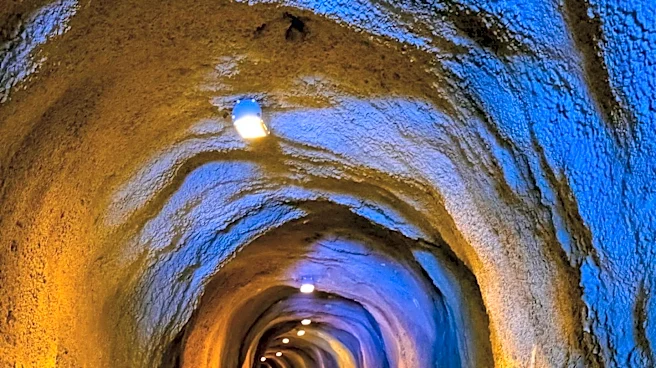
tour. The remaining group boards a boat on a chocolate river, entering a dark tunnel where flashing lights reveal disturbing quick images, including Wonka's rival Arthur Slugworth, a decapitated chicken, various bugs, and a scorpion. During this sequence, Willy Wonka, portrayed by Gene Wilder, sings in a haunting manner. The actors involved in the scene were reportedly unaware that Wilder would deliver his lines in such a disturbing way, contributing to the scene's bizarre and unsettling nature. This unexpected shift from the film's generally whimsical tone to a moment of intense fear and unpredictability has led many to describe it as 'traumatizing' and 'nightmarish,' with some social media users calling it the 'tunnel of terror.'
Why It's Important?
This enduring reaction to the 'tunnel scene' highlights the significant impact that specific cinematic moments can have on an audience, particularly during childhood. The scene's ability to evoke strong feelings of fear and discomfort, even years after initial viewing, demonstrates the power of filmmaking techniques—such as abrupt tonal shifts, unsettling imagery, and unexpected character behavior—to create lasting psychological impressions. For the entertainment industry, this serves as a case study in how creative choices, even those intended to add a layer of creepiness, can become iconic and deeply ingrained in popular culture. It also underscores the subjective nature of audience reception, where a scene intended for a children's film can be perceived as genuinely frightening, influencing viewers' perceptions of the film and its characters for a lifetime. The continued discussion of this scene on social media platforms further illustrates its cultural relevance and its role in shaping collective childhood memories.
What's Next?
While the film is a classic, the ongoing discussion about the 'tunnel scene' suggests that future adaptations or re-evaluations of 'Willy Wonka & the Chocolate Factory' will likely continue to grapple with the balance between whimsy and unsettling elements. Filmmakers and storytellers may draw lessons from this scene regarding the psychological impact of unexpected narrative turns and visual content, especially when targeting younger audiences. The scene's legacy could influence how creators approach moments of tension or horror in family-friendly media, prompting considerations of how to introduce such elements without causing undue distress. Furthermore, as new generations discover the film, the 'tunnel scene' will likely remain a point of discussion and analysis, contributing to its enduring status as a memorable, albeit disturbing, piece of cinematic history.
Beyond the Headlines
The 'tunnel scene' transcends its immediate narrative function to offer deeper insights into the human psyche's response to the unexpected and the uncanny. Its effectiveness lies in the jarring juxtaposition of a seemingly innocent children's story with genuinely disturbing content, creating a sense of unease that challenges conventional expectations. This subversion of genre norms can be seen as a commentary on the darker undercurrents that can exist even within seemingly joyful narratives. Ethically, it raises questions about the boundaries of what is appropriate for children's entertainment and the potential long-term psychological effects of exposure to frightening content at a young age. Culturally, the scene has become a touchstone for discussions about childhood fears and the shared experience of being 'traumatized' by media, fostering a sense of collective memory and nostalgia around a moment of discomfort. It highlights how art can provoke strong emotional responses that resonate across generations, shaping individual and collective perceptions of fear and wonder.