






What's Happening?
A recent analysis by Stanford GSB professor Ilya Strebulaev reveals that a significant portion of the top U.S. AI venture capitalists hold MBAs, with Stanford Graduate School of Business and Harvard Business School graduates overwhelmingly dominating
these ranks. Of the top 100 AI VCs, 38 possess an MBA, and 27 of these degrees (71.1%) are from either Stanford (15) or Harvard (12). This concentration is particularly evident at the very top, where five of the ten highest-ranked investors hold MBAs, with four from Stanford and one from Harvard. Notable investors include Matthew Murphy of Menlo Ventures (No. 1, Stanford MBA), David George (No. 5, Stanford MBA) and Sarah Wang (No. 6, Stanford MBA) of Andreessen Horowitz, and Joshua Kushner of Thrive Capital (No. 4, Harvard MBA). The ranking, which assesses individual investors based on factors like company valuation, dilution, net profit, and value add, focuses exclusively on investments in U.S.-based, venture-backed AI companies.
Why It's Important?
This report highlights a significant trend in the U.S. venture capital landscape, particularly within the burgeoning AI sector. The dominance of Stanford and Harvard MBAs suggests that these institutions play a crucial role in shaping the leadership and investment strategies within the AI industry. This concentration could influence funding patterns, potentially favoring startups with connections to these elite networks. For aspiring entrepreneurs and investors, understanding this educational pipeline is vital for navigating the competitive AI funding environment. The findings also underscore the perceived value of an MBA from these top-tier schools in securing influential positions within high-growth technology sectors, potentially reinforcing existing educational and professional hierarchies in the U.S. business world.
What's Next?
The findings may prompt further discussion within the venture capital community and academic institutions regarding the pathways to success in AI investment. Business schools outside of Stanford and Harvard might re-evaluate their curricula and networking strategies to better prepare graduates for roles in AI venture capital. For startups seeking funding, understanding the educational backgrounds of leading investors could inform their networking and pitching approaches. The continued influence of these specific MBA programs suggests that their alumni networks will remain powerful forces in the U.S. AI investment landscape for the foreseeable future, potentially leading to sustained investment trends and partnerships within these established circles.
Beyond the Headlines
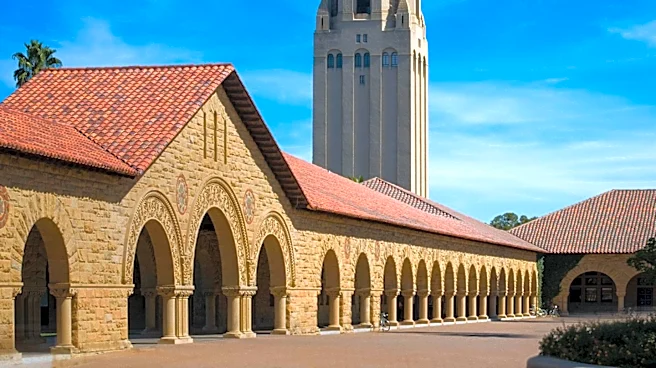
The report touches upon deeper implications concerning social networking and geographical proximity. Professor Strebulaev notes the importance of social networking in education, where Stanford VCs are more likely to invest in Stanford founders, who in turn tend to have a higher likelihood of success. The proximity of Stanford to Silicon Valley's Sand Hill Road also plays a significant role. This suggests that success in AI venture capital is not solely based on individual merit but also heavily influenced by institutional affiliations and established networks. The absence of MBAs from prominent schools like MIT Sloan, despite MIT's strength in AI research, further highlights the unique ecosystem and networking advantages fostered by Stanford and Harvard in the U.S. venture capital sphere.