



What's Happening?
Hormel Foods, a prominent food company, announced a 1% increase in its quarterly dividend to $0.295 a share on November 23, 2026, marking its 61st consecutive year of dividend raises. This decision comes despite a slight dip in net sales, which fell to $2.96
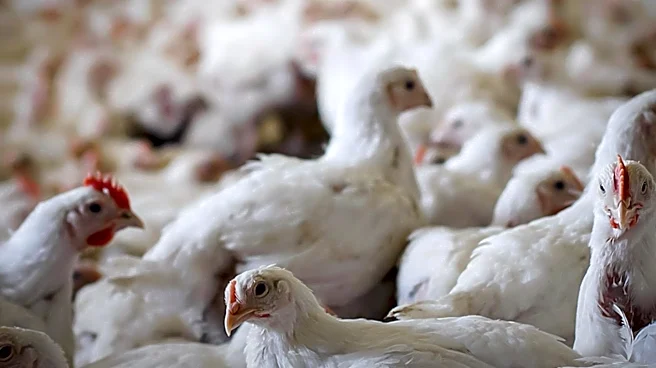
billion from $3.03 billion in the quarter ending July 26, 2026, primarily due to reduced retail volumes. The company's free cash flow coverage for dividends has been tight, with fiscal year 2025 being an exception where dividends ($633 million) exceeded free cash flow ($534 million). However, over the twelve months leading up to July 26, 2026, the payout ratio returned to a covered 82%. A significant development for Hormel was the completion of its $1.06 billion cash purchase of Brakebush Brothers, a chicken company, on November 16, 2026. This acquisition was partly financed by a $700 million term loan taken out on November 13, 2026. John Ghingo, who became CEO on October 26, affirmed the company's commitment to its dividend.
Why It's Important?
Hormel Foods' continued streak of dividend increases is a significant indicator of its long-term financial stability and commitment to shareholder returns, even in the face of fluctuating market conditions. The tight free cash flow coverage, however, highlights the importance of efficient financial management and the potential impact of large strategic investments. The acquisition of Brakebush Brothers represents a strategic move to diversify Hormel's product portfolio beyond its traditional pork-based offerings, potentially mitigating risks associated with commodity price volatility and changing consumer preferences. While the acquisition introduces new debt, Hormel's previously low net debt-to-EBITDA ratio suggests it can manage the additional financial burden. This expansion into the chicken market could open new avenues for growth and strengthen Hormel's position in the broader food industry, impacting its competitive landscape and long-term profitability. The CEO's public statement on the dividend's importance also aims to reassure investors about the company's financial priorities.
What's Next?
Investors and analysts will be closely monitoring Hormel Foods' financial performance in the upcoming quarters, particularly how the Brakebush Brothers acquisition integrates into its operations and contributes to its overall financial health. The impact of the $700 million term loan on interest expenses and its effect on free cash flow will be a key area of focus. The company's ability to maintain its dividend growth streak will depend on its success in generating sufficient free cash flow from its combined operations. Future earnings reports will provide insights into retail volumes, sales trends, and the profitability of its diversified product lines. The market will also be watching for any further strategic moves by Hormel to expand its presence in other food categories or optimize its existing portfolio. The company's fiscal 2026 adjusted EPS guidance of $1.45-$1.51 will be a benchmark for its performance.
Beyond the Headlines
Hormel's strategic acquisition of Brakebush Brothers reflects a broader trend in the food industry towards diversification and consolidation. As consumer tastes evolve and demand for various protein sources shifts, food companies are increasingly looking to expand their offerings to remain competitive. This move could also be a response to the volatility in specific commodity markets, such as pork, by balancing the portfolio with other protein sources like chicken. The emphasis on maintaining a consistent dividend payout, even with tight cash flow, underscores the importance of investor confidence and the perception of stability in mature companies. This strategy can attract and retain long-term investors, but it also necessitates careful financial planning to ensure that dividend payments do not compromise essential investments in growth and innovation. The long-term success of such acquisitions often depends on effective integration and the realization of synergies, which will be a critical factor for Hormel in the coming years.