


What's Happening?
The second-hand fashion market is experiencing significant growth, transforming from a niche activity into a mainstream cultural movement. This shift is largely driven by increasing concerns over sustainability and the environmental impact of fast fashion.
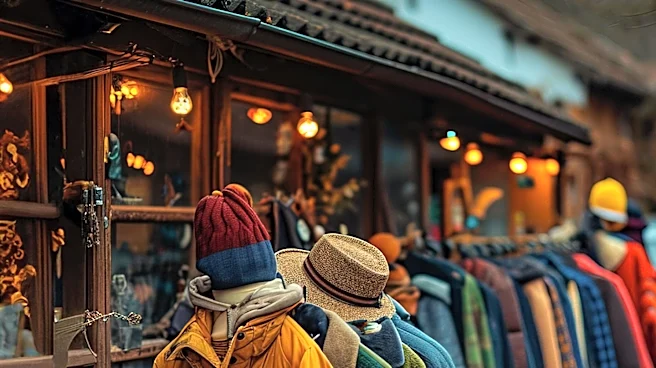
Digital resale platforms such as Vinted, Depop, and ThredUp have played a crucial role in making second-hand shopping more accessible and appealing to a wider audience. Industry reports, including ThredUp’s annual resale market analysis, project that the global second-hand apparel market will expand considerably, reaching nearly $350 billion by 2028. This growth rate is notably faster than that of the broader retail clothing sector. In Western Europe and North America, thrift shopping has seen a boom, with previous stigmas associated with used clothing largely disappearing, particularly among Gen Z and millennial consumers. This trend highlights a growing consumer preference for unique, vintage pieces and a desire to reduce fashion waste.
Why It's Important?
The rapid expansion of the second-hand fashion market has significant implications for the U.S. retail industry, consumer behavior, and environmental sustainability efforts. For consumers, it offers a more affordable and sustainable alternative to new clothing, allowing access to unique styles and designer pieces at a fraction of the original cost. This trend challenges the traditional fast fashion model, which relies on rapid production and consumption, contributing to massive textile waste. The growth of digital resale platforms also creates new economic opportunities for individuals to sell unwanted items, unlocking value from their wardrobes. Environmentally, extending the life of garments through thrifting significantly reduces carbon, water, and waste footprints associated with manufacturing new clothing. This shift encourages a more circular economy within the fashion industry, promoting reuse over disposal and potentially influencing brands to adopt more sustainable practices in their production cycles.
What's Next?
The second-hand fashion market is expected to continue its upward trajectory, with further technological advancements likely to enhance accessibility and user experience on resale platforms. This growth could prompt more traditional retailers to integrate circular models, such as offering their own pre-owned sections, repair services, or take-back programs. As consumer awareness of fashion's environmental impact grows, demand for sustainable and pre-owned options will likely increase, pushing brands to innovate in material sourcing and product longevity. Regulatory bodies may also introduce measures, similar to those in Europe, that hold brands accountable for the end-of-life of their products, further incentivizing sustainable practices. The ongoing challenge will be to ensure that the growth of second-hand markets genuinely displaces new production rather than simply adding another layer to overall consumption.
Beyond the Headlines
Beyond its economic and environmental impacts, the rise of second-hand fashion reflects a deeper cultural shift in how society perceives value, ownership, and consumption. The destigmatization of used clothing, particularly among younger generations, signifies a move away from purely status-driven consumption towards more conscious and individualistic expression. This trend also highlights the power of technology in transforming traditional industries, creating new marketplaces and communities around shared values. The emphasis on unique, vintage pieces fosters creativity and personal style, moving away from the uniformity often associated with mass-produced fashion. Furthermore, the second-hand market encourages a more thoughtful approach to fashion, where items are seen as assets with extended lifespans, challenging the disposable mindset prevalent in recent decades and promoting a stewardship mentality towards belongings.