






What's Happening?
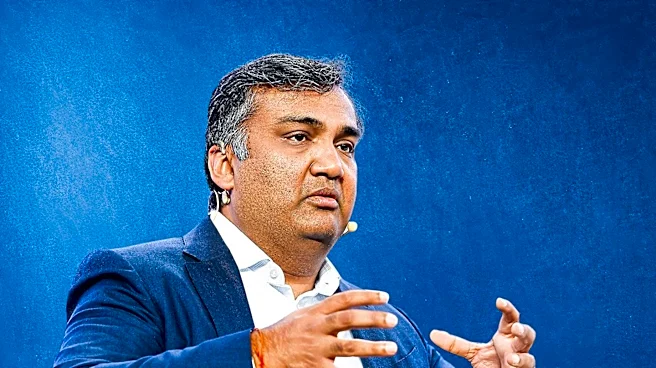
Arvind Krishna, Chairman, President, and CEO of IBM, has been instrumental in reshaping the technology giant's strategic direction since assuming the CEO role in April 2020 and becoming chairman in early 2021. Krishna, who joined IBM in 1990 as a research
scientist, has steered the company towards a sharpened focus on hybrid cloud, enterprise artificial intelligence (AI), and quantum computing. A key move under his influence was the 2019 acquisition of Red Hat for $34 billion, which provided IBM with a robust open-source hybrid cloud platform. Under his leadership, IBM has divested from lower-growth infrastructure services, including the creation of Kyndryl, to prioritize its software portfolio. As of late 2026, software constitutes a significantly larger portion of IBM's revenue mix. Krishna emphasizes innovation-led growth and a willingness to exit businesses that no longer align with the company's core strategy. He holds over a dozen patents and has served on the boards of the Federal Reserve Bank of New York and Northrop Grumman.
Why It's Important?
IBM's strategic pivot under Arvind Krishna is significant for the U.S. technology sector and global enterprise computing. By focusing on hybrid cloud, AI, and quantum computing, IBM is positioning itself at the forefront of critical technological advancements that will define future business operations and innovation. The emphasis on hybrid cloud solutions allows enterprises greater flexibility and efficiency in managing their IT infrastructure, impacting how businesses across various sectors operate and scale. IBM's substantial investments in quantum computing, projected at around $10 billion over several years, could accelerate the development of this transformative technology, potentially leading to breakthroughs in fields like medicine, materials science, and cryptography. Furthermore, Krishna's views on AI's impact on the workforce, suggesting automation of 10-20% of white-collar jobs over the next decade while creating new roles, highlight a crucial discussion point for future employment and skills development in the U.S. and globally.
What's Next?
Looking ahead, Arvind Krishna is expected to continue driving IBM's aggressive push into hybrid cloud, enterprise AI, and quantum computing. The company has committed significant capital to quantum research and deployment, with software revenue growth remaining a primary focus for investors. Krishna has articulated a goal for IBM's software growth to approach double digits in the medium to long term. Internally, cultural changes emphasizing speed, accountability, and a willingness to experiment are ongoing priorities. IBM will also likely continue to engage in public discourse regarding the implications of AI for employment and skills, particularly in key markets like India, where IBM maintains a substantial presence. The success of these strategic initiatives will determine IBM's competitive standing against other major cloud providers and technology firms in the evolving digital landscape.
Beyond the Headlines
Arvind Krishna's leadership at IBM extends beyond immediate financial and technological shifts, touching upon broader implications for the future of work and corporate culture. His perspective on AI's role in automating tasks while simultaneously creating new job categories underscores a fundamental societal transformation. This shift necessitates a re-evaluation of education systems and workforce training programs to equip individuals with the skills needed for an AI-driven economy. Culturally, Krishna's emphasis on agility and experimentation within a large, established organization like IBM reflects a broader trend in corporate leadership towards fostering innovation and adaptability. This approach challenges traditional hierarchical structures and encourages a more dynamic, responsive organizational model. IBM's long-term commitment to quantum computing also raises ethical and security considerations as this powerful technology develops, potentially impacting national security and data privacy frameworks.