




What's Happening?
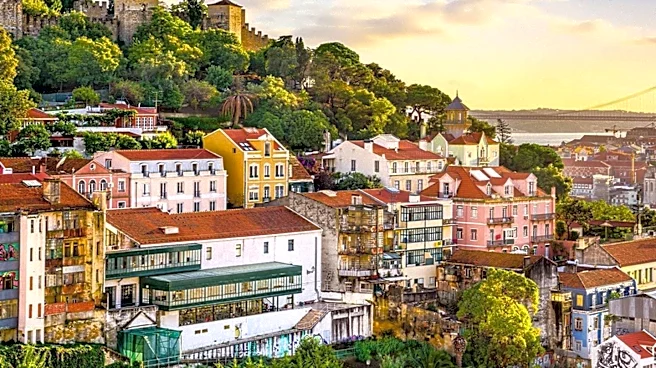
Several Portuguese artists have announced their withdrawal from the inaugural MEO Commedia a La Carte Fest (Lisbon International Humour Festival), which is set to be headlined by American comedian Jerry Seinfeld. Actress Inês Aires Pereira was among the first
to pull her show, 'Namastê,' citing that 'one of the names insistently defends ideas and acts that I consider indefensible,' and adding, 'We cannot relativize or normalize a genocide.' While she did not explicitly name Seinfeld, her statement is widely understood to refer to his outspoken support for Israel amid the ongoing Israel-Gaza conflict. The comedy duo Cebola Mol (Eduardo Madeira and Filipe Homem Fonseca) also withdrew, sharing an illustrated photo of themselves with a watermelon, a symbol of Palestinian solidarity. Other acts, including 'Tributo Pop,' Conjunto Cuca Monga, Pedro Tochas, and Vhils, have also pulled out, though their specific reasons were not publicly disclosed. The festival is scheduled to take place from October 29 to November 1.
Why It's Important?
This series of withdrawals highlights the increasing impact of geopolitical conflicts, specifically the Israel-Gaza conflict, on the entertainment industry and cultural events globally. The artists' decisions underscore a growing trend where public figures are being held accountable for their political stances, leading to professional repercussions. Jerry Seinfeld's past comments, such as comparing the 'Free Palestine' movement to the Ku Klux Klan, have drawn significant criticism and are a key factor in the artists' protests. This situation reflects a broader societal tension where calls for artistic freedom clash with demands for moral and political alignment, particularly concerning sensitive international issues. The incident demonstrates how artists and audiences are increasingly using their platforms and choices to express solidarity or dissent, influencing event lineups and potentially impacting the careers of those involved. This also signals a challenge for event organizers who must navigate complex political landscapes when curating international festivals.
What's Next?
The withdrawals of multiple artists from the MEO Commedia a La Carte Fest will likely put pressure on the festival organizers and Jerry Seinfeld. The Hollywood Reporter has reached out to representatives for Seinfeld and the festival for comment, indicating potential official responses or statements in the near future. The controversy could lead to further artists withdrawing, or it might prompt the festival to address the situation publicly, possibly by issuing a statement or making changes to its lineup. This event could also influence other international festivals and entertainment platforms to re-evaluate their policies regarding artists with controversial political views. The incident is part of a larger pattern of artists and public figures facing backlash for their opinions on the Israel-Gaza conflict, suggesting that similar situations may arise in other cultural events, leading to ongoing debates about freedom of speech, artistic responsibility, and political activism within the entertainment industry.
Beyond the Headlines
This situation delves into the complex interplay between artistic expression, political activism, and moral responsibility in the public sphere. The artists' decision to withdraw, even without explicitly naming Seinfeld, reflects a growing sentiment that silence or perceived neutrality on certain issues is no longer acceptable. The use of symbols like the watermelon by Cebola Mol underscores the creative ways in which political messages are conveyed and understood within cultural contexts. This incident also highlights the challenges faced by individuals and institutions in navigating highly polarized global conflicts, where taking a stance can lead to significant professional and public consequences. It raises questions about the role of comedians and entertainers in political discourse, and whether their platforms inherently carry a responsibility to align with certain ethical positions. The event could contribute to a broader re-evaluation of how cultural events are curated and how artists engage with global humanitarian issues.