







What's Happening?
The Lumenate app, available on Google Play, provides a unique approach to meditation and relaxation by utilizing flickering light and sound. The app aims to guide users into an altered state of consciousness, described as being between deep meditation and a psychedelic-like
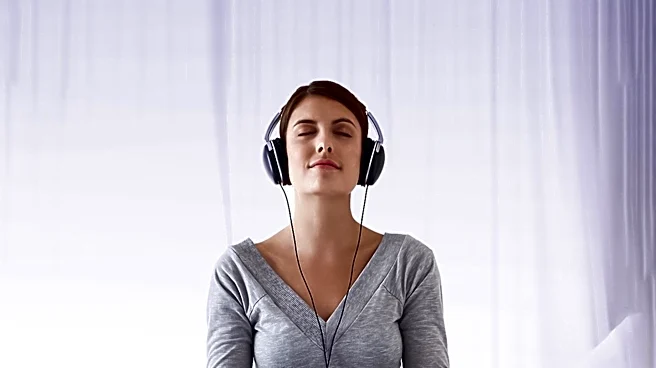
journey. This state is intended to foster immersion in the present moment, generate closed-eye visuals, and allow for self-exploration. The process involves pointing the phone's flashlight towards the user's closed eyes while listening to accompanying sounds, which together create an inner journey of colors and patterns. Lumenate highlights benefits such as stress reduction, mental exploration, improved sleep, enhanced focus, increased creativity, and emotional processing. The technology is based on Flicker Light Stimulation, a non-pharmacological method for inducing altered states of consciousness, and the company supports ongoing research in this area at leading universities. The app also features exclusive content, including special mixes of John Lennon’s ‘Mind Games’ and guided sessions voiced by actress Rosamund Pike, who serves as the company’s Creative Director.
Why It's Important?
The emergence of apps like Lumenate signifies a growing trend in digital wellness, offering alternative methods for mental well-being beyond traditional meditation. By leveraging technology such as flickering light stimulation, these apps aim to provide accessible tools for stress management, self-discovery, and improved sleep, which are critical concerns in modern society. The app's scientific backing, with ongoing research into Flicker Light Stimulation, could lend credibility to its approach and potentially pave the way for broader acceptance of technology-assisted mindfulness practices. For individuals seeking novel ways to de-stress or explore their consciousness, Lumenate presents a distinct option. The involvement of public figures like Rosamund Pike and the use of iconic music like John Lennon's 'Mind Games' also broadens its appeal, potentially attracting a wider audience to mindfulness and mental health tools. However, it's crucial for users to understand that the app is not a medical device and is not intended to diagnose or treat medical conditions, as explicitly stated by the developers.
What's Next?
Lumenate offers various subscription options, including monthly and yearly auto-renewing plans, with a commitment to providing free access to those facing affordability issues. This approach suggests a focus on accessibility and wider adoption. Future developments for the app may include continued expansion of its content library, potentially featuring more collaborations with artists or experts in mindfulness and neuroscience. As research into Flicker Light Stimulation progresses, the app could integrate new findings to refine its user experience and efficacy. The company's emphasis on ongoing research indicates a potential for further scientific validation, which could lead to increased trust and usage. Additionally, as the digital wellness market evolves, Lumenate may explore integrations with other health platforms or wearable technologies to offer a more holistic user experience. The app's continued growth will likely depend on user feedback, scientific advancements, and its ability to differentiate itself in a competitive market of meditation and wellness applications.
Beyond the Headlines
The Lumenate app touches upon deeper implications regarding the intersection of technology, consciousness, and well-being. Its use of flickering light to induce altered states raises questions about the ethical boundaries and potential psychological impacts of such non-pharmacological interventions. While the app emphasizes relaxation and exploration, the nature of inducing 'psychedelic-like journeys' through technology warrants careful consideration, especially concerning user safety and psychological preparedness. The app explicitly states it is not suitable for individuals under 18 or those with a history of epilepsy, highlighting the importance of responsible usage and clear disclaimers. This development also reflects a broader cultural shift towards seeking alternative states of consciousness for personal growth and stress relief, moving beyond traditional methods. The integration of scientific research with a consumer-facing app could also influence how the public perceives and utilizes neuro-technologies for mental health, potentially normalizing technologically-mediated experiences for self-improvement and exploration.