



What's Happening?
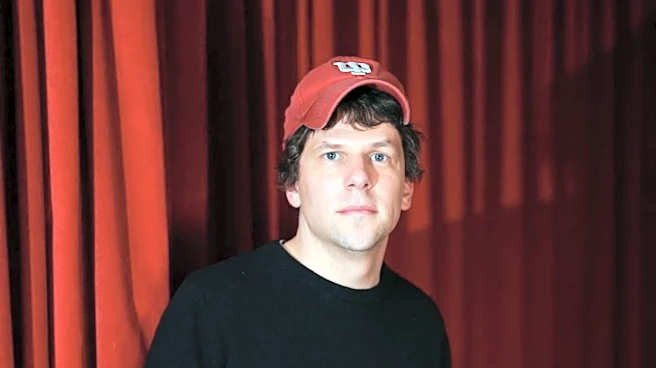
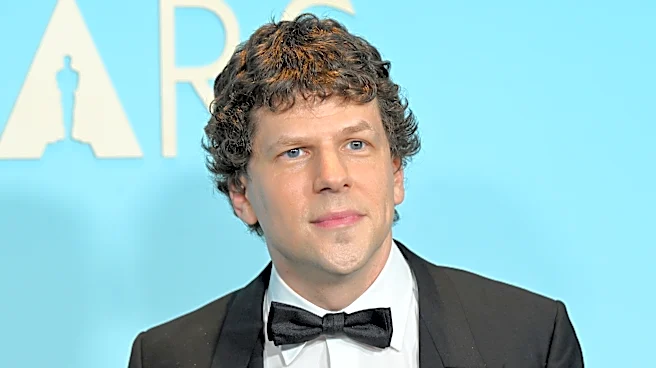
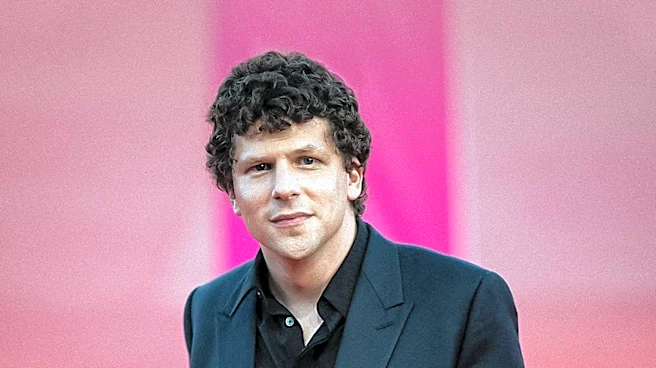
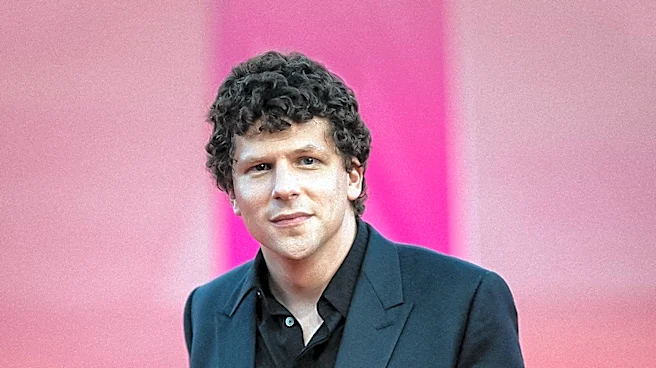
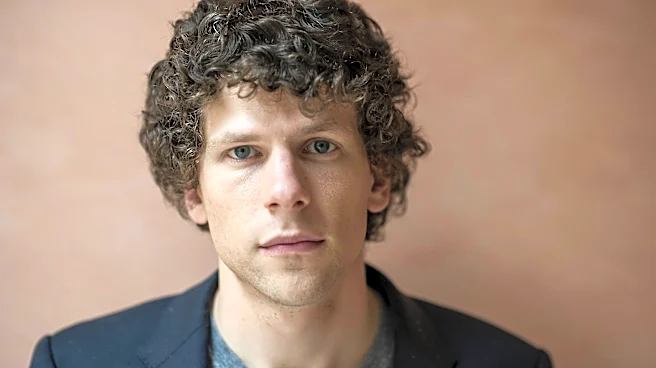
Jesse Eisenberg, the Oscar-nominated actor and filmmaker, has offered a unique explanation for why he is largely left undisturbed while working in public. In a New Yorker profile, Eisenberg described his routine of writing at a New York Public Library
branch on a weekday schedule, noting that strangers rarely interrupt him. He theorized that this is due to 'no sexuality' in his work, distinguishing his on-screen recognition from being perceived as an object of desire. Eisenberg's explanation suggests that actors whose screen personas evoke romantic fascination may experience a different level of public attention compared to those known for anxious, cerebral, or socially awkward characters. Despite his prominent roles in films like 'The Social Network' and 'Zombieland,' Eisenberg maintains a routine that mirrors that of other patrons quietly working on their own projects. He also discussed the challenges he faced in establishing a creative path behind the camera, emphasizing that his work as a playwright, screenwriter, and director is the result of a long process rather than an immediate byproduct of his acting success.
Why It's Important?
Eisenberg's perspective offers insight into the nuanced nature of celebrity and public interaction in the United States. His theory challenges conventional understandings of fame, suggesting that the type of roles an actor undertakes can significantly influence how the public perceives and interacts with them in everyday life. This has implications for how actors manage their public image and personal space, particularly in a culture often obsessed with celebrity. The ability of a well-known figure like Eisenberg to maintain a relatively normal working routine in a public setting highlights a potential shift in how certain celebrities are viewed, moving away from constant public intrusion towards a more respectful distance. This could influence how emerging actors approach their career choices, considering not just artistic merit but also the potential impact on their personal lives. Furthermore, his experience underscores the broader societal discussion about the boundaries between public figures and their private lives, and how those boundaries are negotiated in an increasingly connected world.
What's Next?
As Jesse Eisenberg promotes his third feature film as a director, 'The Debut,' which is scheduled for a December 11 theatrical release, audiences will have the opportunity to engage with his latest creative endeavor. The film, starring Julianne Moore and Paul Giamatti, concerns a New Jersey woman who becomes engrossed in a local theatrical production. Eisenberg's ongoing work as a director and writer suggests a continued focus on his behind-the-camera career, potentially leading to more projects that further define his artistic voice beyond acting. The public's reception of 'The Debut' may also influence perceptions of his directorial capabilities and the types of stories he chooses to tell. His continued practice of writing in public spaces indicates a preference for routine over the typical trappings of fame, suggesting he will likely maintain this approach to his creative process. This could inspire other public figures to seek similar methods of integrating their professional and personal lives, fostering a more grounded approach to celebrity.
Beyond the Headlines
Eisenberg's comments delve into the psychological and sociological aspects of celebrity, touching upon themes of public perception, personal space, and the commodification of image. His distinction between being recognized and being seen as an 'object of desire' highlights a deeper conversation about how gender, attractiveness, and performance roles shape public interaction with famous individuals. This perspective could spark broader discussions within the entertainment industry about the pressures actors face to maintain certain public personas and the impact these personas have on their daily lives. Ethically, it raises questions about the public's right to access or interact with celebrities versus the celebrity's right to privacy and normalcy. Culturally, it reflects a potential shift in how society views and treats public figures, perhaps moving towards a more nuanced understanding of their humanity beyond their on-screen roles. This could contribute to a long-term trend where celebrities are increasingly able to carve out more private lives, challenging the traditional expectations of constant public availability.