








What's Happening?
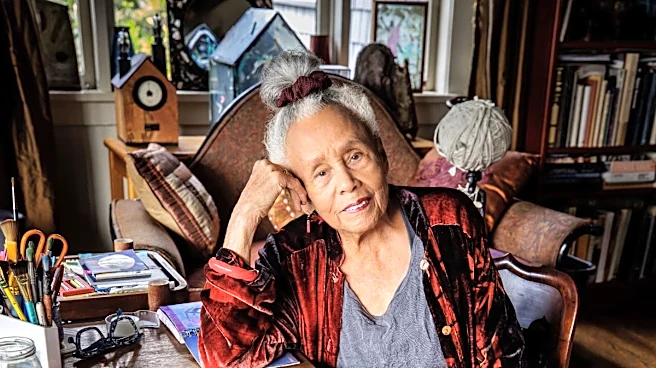
Renowned artist Betye Saar, known for her work reflecting Black identity, culture, and spirituality, has died at the age of 99 in Los Angeles. Saar was a pivotal figure in the 1960s Black Art Movement, celebrated for her assemblage boxes and sculptures
made from found objects. Her work often incorporated Jim Crow-era memorabilia, transforming them into symbols of Black liberation. Saar's career began in design before she transitioned to art at 35, continuing to create into her 90s. Her art, which includes painting, printmaking, and sculpture, often featured symbols like boats, clocks, and altars, and was rich with cultural and political commentary. Notable works include 'Black Girl’s Window' and 'The Liberation of Aunt Jemima,' the latter created in response to the assassination of Martin Luther King Jr. Saar's influence extended beyond her art, as she mentored generations of Black artists.
Why It's Important?
Betye Saar's work holds significant cultural and historical importance, as it challenges and redefines narratives around Black identity and history. Her art not only provided a platform for Black voices in a predominantly white art world but also served as a form of activism, addressing racial stereotypes and injustices. Saar's ability to transform derogatory imagery into powerful symbols of resistance and empowerment has inspired countless artists and activists. Her legacy continues to influence contemporary discussions on race, identity, and representation in art. Saar's contributions have been recognized by major institutions, although her work was not consistently exhibited in large venues until later in her career. Her passing marks the end of an era, but her impact on the art world and society at large endures.
What's Next?
In the wake of Betye Saar's passing, her work is likely to receive renewed attention and appreciation. Current exhibitions, such as 'Let’s Get It On: The Wearable Art of Betye Saar' in Los Angeles and a collection of her dolls at the New-York Historical Society, will continue to showcase her contributions to art and culture. The art community may see a surge in interest in Saar's work, potentially leading to more exhibitions and retrospectives. Additionally, her influence on younger generations of artists will likely be explored in future academic and artistic endeavors. As institutions continue to address diversity and representation, Saar's legacy will remain a critical reference point in these discussions.