

What's Happening?
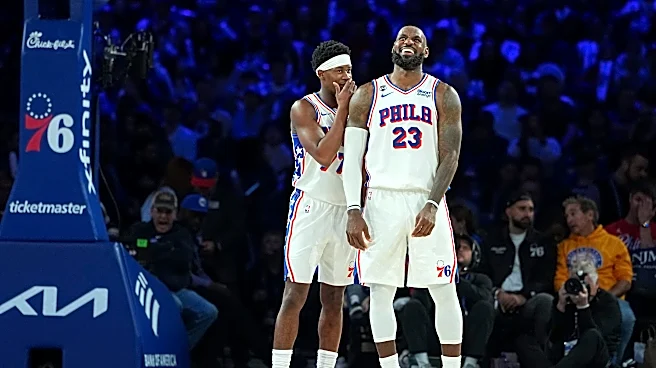
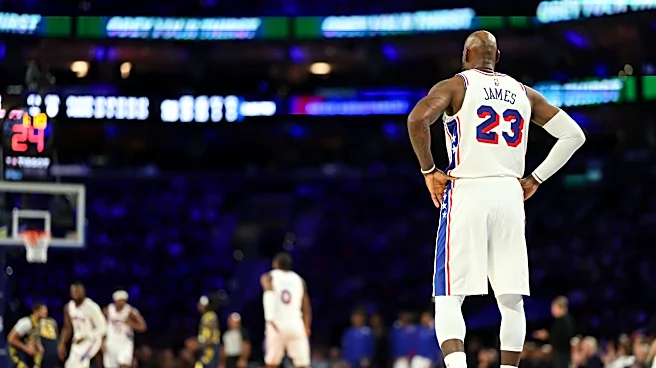
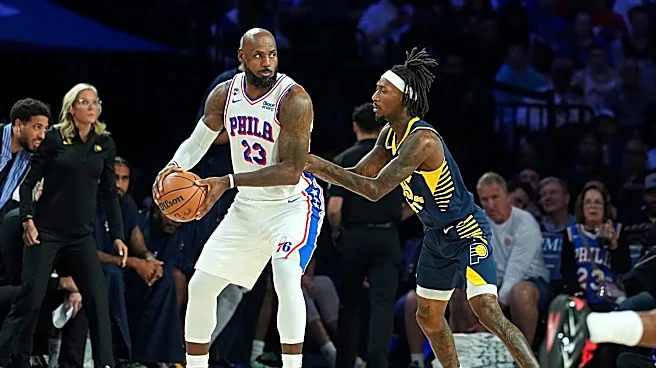
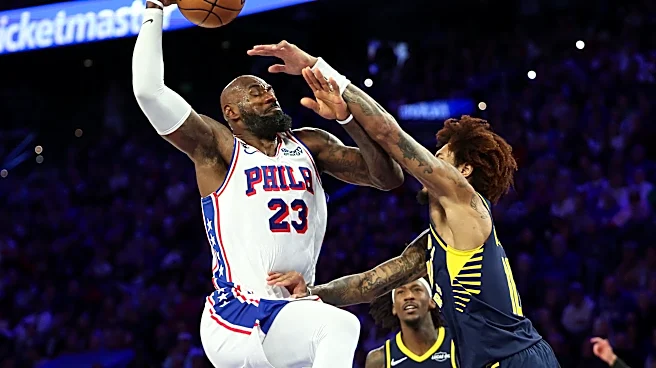
LeBron James, a player for the Philadelphia 76ers, has publicly denied a report by ESPN's Dave McMenamin suggesting he asked the team's coaches for patience to find his rhythm and conditioning. The report, shared by NBA on ESPN on Instagram, stated that
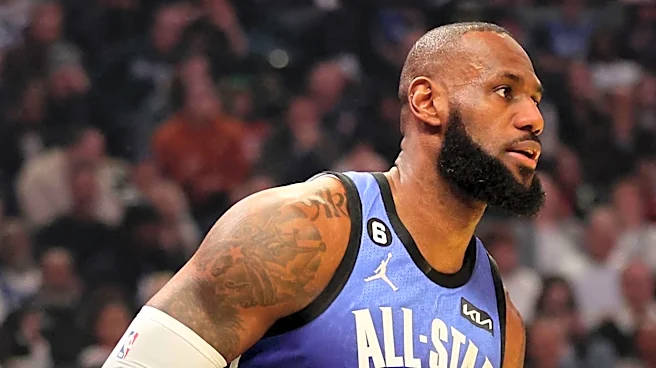
James expected to get his conditioning in line by December and was averaging career lows in points, minutes, and 3-point percentage through 11 games. James reposted the ESPN post on his Instagram story, explicitly stating, 'Those words never came out of my mouth!' and included a baseball cap emoji, indicating the report was false. James is currently in his 24th NBA season at 41 years old, averaging 15.1 points, 7.2 rebounds, and 6.9 assists. Despite his age and a long career marked by durability, he has faced injuries in recent seasons, including ankle and foot issues.
Why It's Important?
This incident highlights the ongoing scrutiny and media attention surrounding high-profile athletes like LeBron James, even in the later stages of their careers. The immediate and public refutation by James underscores the importance of accurate reporting and the athlete's control over their narrative. Such disputes can impact the relationship between athletes and sports media, potentially leading to distrust or increased skepticism from fans regarding news reports. For the Philadelphia 76ers, it clarifies that James is not seeking special accommodations for his conditioning, which could otherwise raise questions about his commitment or readiness. It also reinforces James's reputation for maintaining high standards of fitness and performance, even as he approaches 42 years old in his 24th season.
What's Next?
Following James's direct refutation, it is likely that ESPN and Dave McMenamin may face pressure to address the accuracy of their report or provide further clarification on their sources. The situation could lead to increased caution in reporting on James's personal requests or discussions with team staff. For James and the 76ers, the focus will remain on his on-court performance and integration with the team as the season progresses. His continued play at a high level, despite being in his 24th season, will be closely watched, especially as he manages his workload and any potential injuries. The incident may also prompt more direct communication from James regarding his physical status to preempt future speculative reports.
Beyond the Headlines
This event touches upon broader themes of media ethics and the challenges of reporting on sports figures in the digital age. The rapid spread of information, often through social media, means that inaccuracies can quickly gain traction, necessitating swift and direct responses from those affected. For athletes, managing their public image and controlling their narrative has become increasingly crucial. James's use of his personal social media to directly counter a major sports network's report demonstrates the evolving power dynamics between athletes and traditional media outlets. It also raises questions about the verification processes for 'sources' in sports journalism and the potential impact of such reports on team dynamics and player morale.