





What's Happening?
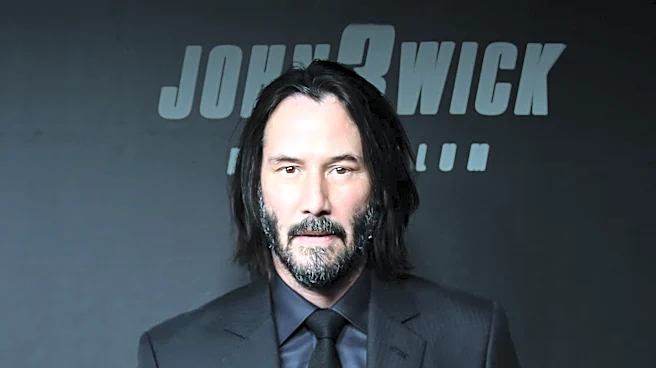
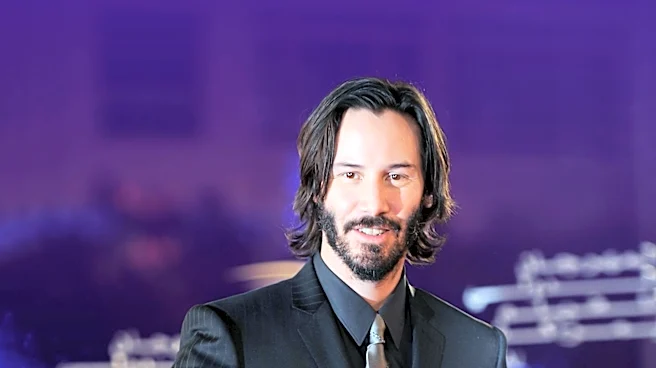
Before Netflix produced its live-action series, actor Keanu Reeves was slated to star in a film adaptation of the popular anime 'Cowboy Bebop'. The project, which began discussions in 2008 with Fox financing, aimed to bring the science fiction anime to the big
screen. Reeves expressed significant interest in leading the adaptation, citing 'Cowboy Bebop' as his favorite anime. By early 2009, key personnel from the original anime were brought on as associate producers, and Peter Craig was hired as the screenwriter. Craig, known for his work on films like 'The Town' and 'The Hunger Games: Mockingjay', developed an ambitious script that was highly faithful to the anime. However, the project encountered significant financial obstacles. Reeves himself estimated that the film would require approximately $500 million to produce, a cost deemed prohibitive by the studio. The subsequent failure of Fox's 'Dragonball Evolution' further deterred the studio from investing heavily in another anime adaptation, ultimately leading to the indefinite stagnation and eventual cancellation of the 'Cowboy Bebop' film.
Why It's Important?
The cancellation of the 'Cowboy Bebop' film adaptation starring Keanu Reeves highlights the significant financial risks and challenges associated with bringing beloved anime properties to live-action. The estimated $500 million budget for the film underscores the high production costs often involved in creating visually complex science fiction narratives. This situation demonstrates how studio apprehension, particularly after previous box office disappointments like 'Dragonball Evolution', can impact the greenlighting of ambitious projects. For fans of anime, this event represents a missed opportunity to see a high-profile adaptation with a major star, while also illustrating the delicate balance between creative vision and financial viability in Hollywood. The decision to abandon the film ultimately paved the way for Netflix's later series adaptation, which also faced its own challenges, suggesting a recurring difficulty in translating 'Cowboy Bebop' to live-action.
What's Next?
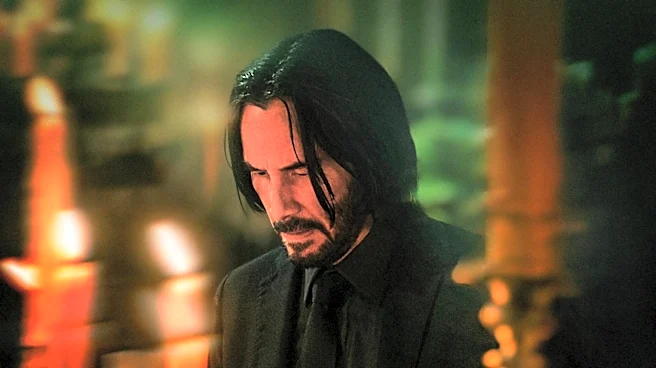
While the Keanu Reeves-led film adaptation of 'Cowboy Bebop' is no longer a possibility, the legacy of the project's challenges continues to influence how studios approach anime adaptations. The experience with the film's high budget and subsequent cancellation likely contributed to the cautious approach seen in later live-action attempts. For Keanu Reeves, his interest in 'Cowboy Bebop' did not wane, as he reportedly drew inspiration from the anime for the ending of 'John Wick 4'. This indicates that while direct adaptation may be difficult, the influence of such properties can still manifest in other creative works. Future anime adaptations will likely continue to grapple with balancing fidelity to the source material with realistic budgetary constraints, with studios carefully evaluating the commercial viability and potential audience reception.
Beyond the Headlines
The story of the unmade 'Cowboy Bebop' film delves into the broader cultural phenomenon of adapting foreign media for Western audiences, particularly from Japan. The financial hurdles faced by the project reflect a common tension between preserving the artistic integrity and scale of the original anime and making it commercially viable for a global market. The high budget estimate suggests a desire to create a faithful, large-scale cinematic experience, but also reveals the economic realities that often force compromises or cancellations. This case also touches upon the 'curse' of anime adaptations, where many attempts have struggled to capture the essence of the source material or achieve critical and commercial success. The eventual shift to a streaming series format by Netflix, with a different cast and creative team, further illustrates the evolving strategies in Hollywood for adapting popular intellectual properties, often driven by changing audience consumption habits and production models.