





What's Happening?
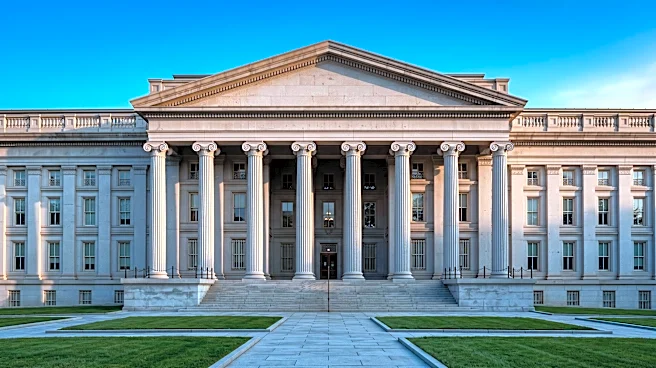
The U.S. Department of the Treasury is responsible for operating and maintaining systems vital to the nation's financial infrastructure. These responsibilities include the production of coin and currency, the disbursement of payments to the American public,
federal revenue collection, and managing the borrowing of funds necessary to operate the federal government. The Treasury Department also plays a key role in advising the President on economic and financial issues, with the goal of encouraging sustainable economic growth and improving governance within financial institutions. The Office of Domestic Finance, led by the Under Secretary, specifically advises on the domestic financial system, fiscal policy, governmental assets and liabilities, and related economic matters. Debt management policies are typically developed through a quarterly refunding process.
Why It's Important?
The Treasury Department's functions are fundamental to the stability and operation of the U.S. economy. Its management of currency and payments ensures the smooth flow of commerce and government operations, directly impacting every American citizen and business. The department's role in revenue collection and debt management is critical for fiscal health, influencing national spending, interest rates, and the country's financial standing on a global scale. By advising the President on economic and financial issues, the Treasury helps shape policies that affect employment, inflation, and overall economic growth. Furthermore, its efforts to foster improved governance in financial institutions contribute to market stability and consumer protection, preventing financial crises and ensuring a fair and transparent financial system. The department's oversight of programs like the Gulf Coast Restoration Trust Fund also demonstrates its involvement in specific economic recovery and development initiatives.
What's Next?
The Treasury Department will continue its ongoing responsibilities in managing the nation's financial infrastructure and advising on economic policy. This includes regular updates to debt management policies, which are typically reviewed and adjusted during the quarterly refunding process. The department will also continue to issue various financial reports, such as the Daily Treasury Statement, the Monthly Treasury Statement of Receipts and Outlays, and the Monthly Statement of the Public Debt, providing transparency on federal finances. The Financial Report of the United States Government will offer a comprehensive view of the federal government's financial position to the President, Congress, and the public. Additionally, the Treasury will remain engaged in identifying risks to U.S. financial stability through bodies like the Financial Stability Oversight Council and will continue to monitor the insurance sector through the Federal Insurance Office, representing the U.S. on international insurance matters.
Beyond the Headlines
The Treasury Department's multifaceted role extends beyond day-to-day financial operations, touching upon broader issues of national economic resilience and international financial diplomacy. Its management of the debt limit, for instance, often becomes a focal point in political debates, highlighting the interplay between fiscal policy and legislative action. The department's efforts to encourage economic growth and improve financial governance have long-term implications for the competitiveness of U.S. industries and the well-being of its citizens. Furthermore, its representation of the U.S. on international financial matters underscores the interconnectedness of global economies and the importance of coordinated policy efforts to address shared challenges. The Treasury's foundational work in maintaining financial stability is a cornerstone of national security and prosperity, influencing everything from individual savings to global trade relationships.