




What's Happening?
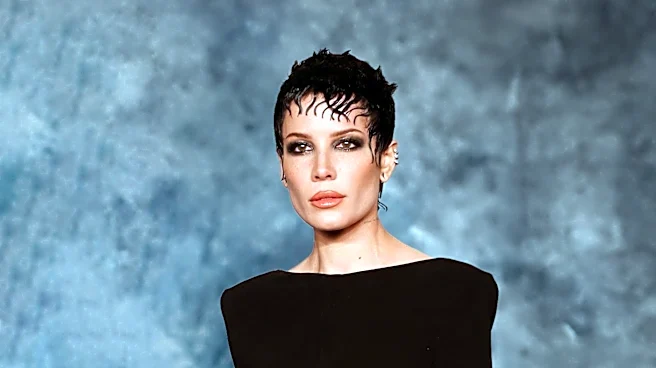
Halsey, whose real name is Ashley Nicolette Frangipane, has been openly discussing her diagnoses of ADHD and bipolar disorder. She integrates these experiences into her music and interviews, providing a candid perspective on living with these conditions.
Unlike many public figures who might frame such diagnoses as overcome challenges, Halsey emphasizes that these are conditions she coexists with daily. She describes her brain as oscillating between creative euphoria and collapse, a cycle that is often misunderstood by the music industry. Halsey has faced pressure from record labels to maintain a consistent output, despite the non-linear nature of her creative process, which is heavily influenced by her mental health. She highlights the industry's discomfort with the unpredictable reality of mental health, which can lead to canceled tours or varied album styles.
Why It's Important?
Halsey's frank discussions about ADHD and bipolar disorder are significant for several reasons. Firstly, they contribute to destigmatizing mental health conditions within the entertainment industry and broader society. By sharing her personal struggles and the impact on her creative process, she offers a relatable narrative for many who experience similar challenges. Secondly, her experience sheds light on the systemic pressures within the music industry, where the demand for constant output often clashes with the realities of mental health. This can lead to artists feeling compelled to hide their struggles or push themselves beyond healthy limits. Her transparency encourages a more nuanced conversation about how industries can better support individuals with mental health conditions, moving beyond superficial acknowledgments to genuine understanding and accommodation. This also empowers other artists and public figures to speak out, fostering a more supportive environment.
What's Next?
Halsey's continued advocacy and open dialogue are likely to further influence conversations around mental health in the entertainment industry. Her participation in the film 'Americana,' scheduled for October 15, 2026, could provide another platform for her to share her experiences, potentially reaching a wider audience. It is anticipated that more artists may follow her lead in discussing their mental health journeys, prompting record labels and management to re-evaluate their approaches to artist well-being. This could lead to the development of more flexible contracts, better mental health support systems, and a greater understanding of the creative process for individuals with neurodivergent conditions. Her ongoing public discourse may also inspire fans and the general public to seek professional help and engage in more open conversations about their own mental health.
Beyond the Headlines
Beyond the immediate impact on the music industry, Halsey's narrative touches upon deeper societal implications regarding productivity, authenticity, and the public perception of success. Her struggle to reconcile her creative output with the unpredictable nature of her conditions challenges the conventional notion that creativity is a constant, controllable flow. This raises ethical questions about the exploitation of artists' vulnerabilities for commercial gain and the pressure to maintain a curated public image. Culturally, her openness contributes to a growing movement that values authenticity and vulnerability over idealized perfection. This shift can foster a more empathetic society where mental health is viewed as an integral part of human experience rather than a personal failing. Her story also highlights the importance of self-awareness and the ongoing process of managing chronic conditions, rather than seeking a 'cure' or 'overcoming' them.