


What's Happening?
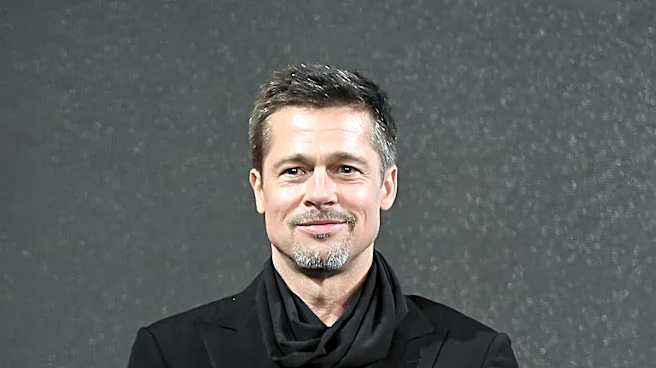
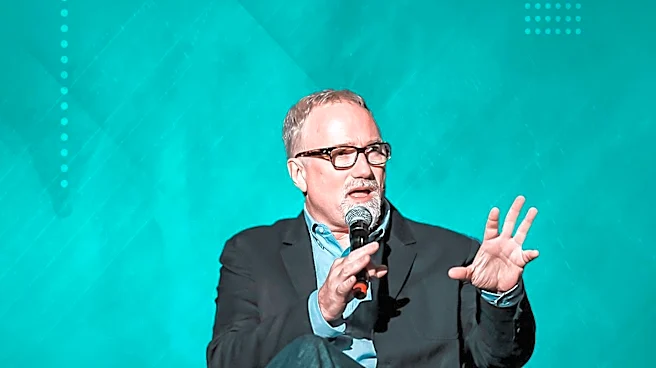
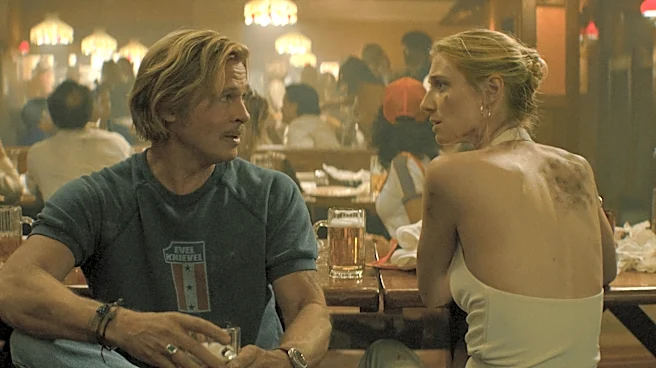
Director David Fincher has helmed 'The Further Mis-Adventures of Cliff Booth,' a sequel to Quentin Tarantino’s 2019 film 'Once Upon a Time in Hollywood.' The new movie, which features Brad Pitt reprising his role as Cliff Booth, is set a few years after
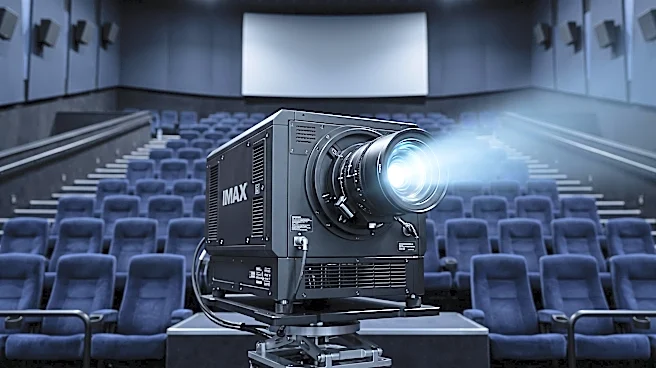
the events of the original film. It is scheduled for a brief IMAX theatrical release before moving to Netflix during Christmas week. The narrative follows Cliff Booth, no longer a stunt double, as he takes on various roles including a bartender, figure-eight racer, confidential adviser, and 'fixer' for the Hollywood elite. The film is characterized by extensive dialogue, sudden bursts of violence, and a detailed evocation of 1970s Los Angeles, reflecting a directorial style reminiscent of Tarantino's own work. The plot involves Cliff's entanglement with Filipino gangsters while assisting an actor, though the film's primary focus is on portraying the era and its characters.
Why It's Important?
This film is significant for several reasons within the entertainment industry. Firstly, it marks a notable collaboration and stylistic convergence between two prominent directors, David Fincher and Quentin Tarantino, with Fincher adopting many elements of Tarantino's narrative and visual approach. This could influence future filmmaking trends, particularly in how sequels or spin-offs are handled when original creators are not directly directing. Secondly, the release strategy—a limited IMAX run followed by a Netflix debut—highlights the evolving distribution models in Hollywood, balancing traditional cinematic experiences with the growing dominance of streaming platforms. For audiences, it offers a continuation of a beloved character and world, potentially expanding the 'Once Upon a Time in Hollywood' universe. The film's focus on 1970s Hollywood also provides a cultural and historical commentary on the era, appealing to those interested in cinematic history and period pieces.
What's Next?
Following its limited IMAX run, 'The Further Mis-Adventures of Cliff Booth' will be available on Netflix during Christmas week, making it accessible to a global streaming audience. The film's reception will likely be closely watched by industry analysts, particularly regarding its performance on Netflix and how it compares to its predecessor. The collaboration between Fincher and Tarantino's stylistic elements could pave the way for more directors to explore and adapt each other's narrative techniques in future projects. The success of this sequel may also encourage further exploration of spin-offs or continuations of popular film characters and universes, especially through streaming platforms. Additionally, the film's detailed portrayal of 1970s Los Angeles might spark renewed interest in the cultural and historical aspects of that period.
Beyond the Headlines
The film's approach to storytelling, characterized by extensive dialogue and sudden violence, raises questions about the evolving nature of cinematic narrative and audience engagement. The blend of grim comedy with horrifying violence, a hallmark of Tarantino's style, when executed by Fincher, could further blur the lines between genre conventions and artistic expression. The film's detailed depiction of 1970s Los Angeles, including specific geographical references and cultural nuances, serves as more than just a backdrop; it acts as a character in itself, offering a nostalgic yet critical look at a pivotal era in Hollywood. This emphasis on setting and atmosphere, combined with a character-driven plot, underscores a trend towards immersive world-building in contemporary cinema. The choice to release on Netflix after a brief theatrical run also highlights the ongoing debate about the future of movie distribution and the balance between traditional cinema and streaming services.