


What's Happening?
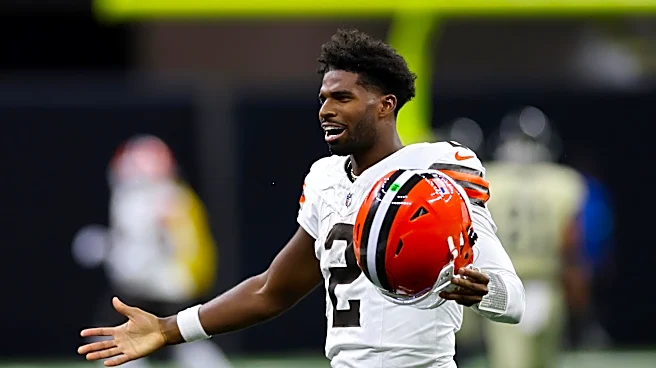
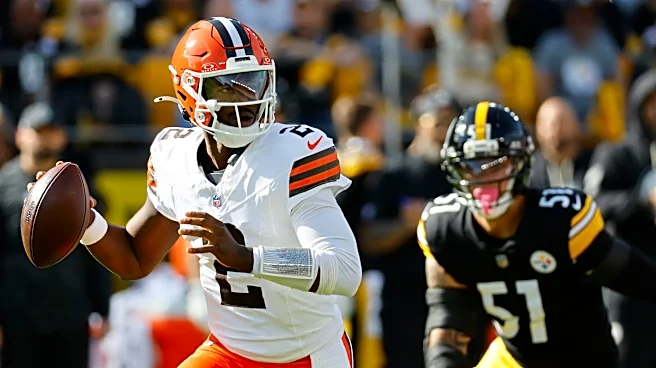
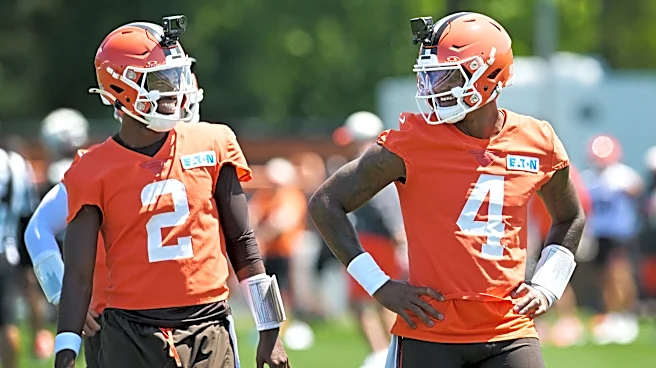
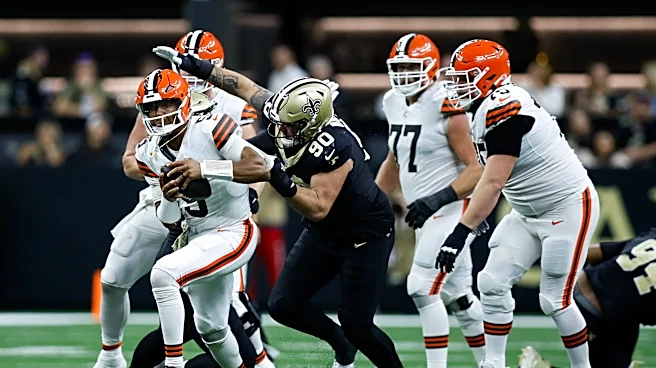
Sports analyst Jason Whitlock criticized Cleveland Browns quarterback Shedeur Sanders following the team's 23-22 overtime loss to the New Orleans Saints. Whitlock specifically pointed out that Sanders "holds the ball too long" and "processes the defense
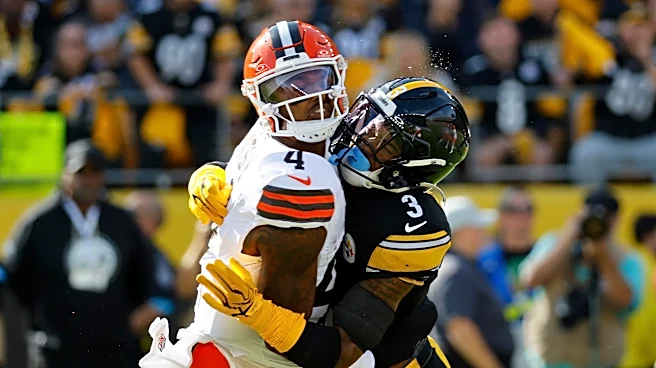
slow," suggesting these issues were unfixed from his college days. Sanders' performance in the game was mixed, with 297 passing yards and two touchdowns, but he also took five sacks. Whitlock's comments were part of a broader mixed reaction from the NFL world to Sanders' first start of the season, where some analysts praised his resilience while others highlighted his flaws.
Why It's Important?
Whitlock's critique is significant because it targets fundamental aspects of quarterback play that are crucial for success in the NFL. Holding the ball too long can lead to sacks, turnovers, and missed opportunities, while slow processing can hinder a team's offensive rhythm. For a young quarterback like Shedeur Sanders, who is under intense scrutiny due to his lineage and high profile, such technical criticisms from a prominent analyst can impact perceptions of his potential and development. This commentary contributes to the ongoing evaluation of Sanders' readiness for a starting role in the NFL and highlights areas where he needs to improve to solidify his position.
What's Next?
Shedeur Sanders will likely continue to be under the microscope, with analysts and coaches closely watching his ability to address the issues of ball-holding and processing speed. His development in these areas will be critical for his future in the NFL, especially if he aims to secure a permanent starting role. The Browns' coaching staff will need to work with him on these technical aspects, and his performance in upcoming games will be key to demonstrating improvement. The debate over his capabilities will persist as he gains more experience.
Beyond the Headlines
This analysis goes beyond a simple game critique, touching on the developmental challenges faced by young quarterbacks transitioning from college to the professional level. The NFL demands quicker decision-making and a more refined understanding of defensive schemes, and Whitlock's comments underscore the steep learning curve. It also highlights the role of media in dissecting player performance, often focusing on specific technical flaws that can make or break a player's career. The pressure on athletes to adapt and evolve their game is immense, and public commentary like Whitlock's serves as a constant reminder of these expectations.