




What's Happening?
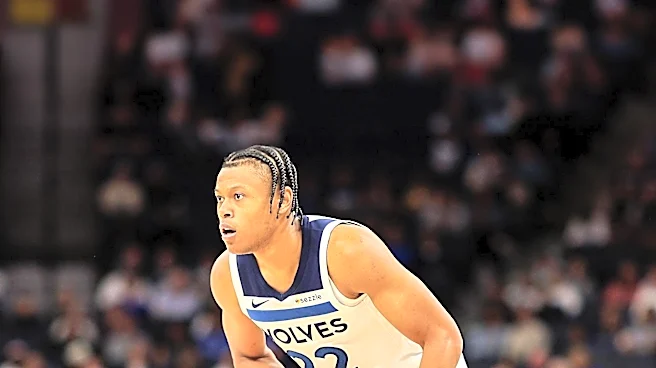
Marc Stad, founder and managing partner of Dragoneer Investment Group, has reached an agreement to acquire a controlling interest in the Minnesota Timberwolves and Minnesota Lynx. This transaction, reported by ESPN on August 21, 2026, values the franchises
at $4.5 billion, a significant increase from the $1.5 billion valuation when the current ownership group, led by Marc Lore and Alex Rodriguez, initially agreed to purchase the teams from Glen Taylor. Stad was previously a minority investor in the group. Under the new arrangement, Stad will become the controlling owner and largest shareholder. Marc Lore will retain a minority investment, while Alex Rodriguez has increased his ownership stake. The deal is pending approval from the NBA Board of Governors. Stad's wife, Elisa Stad, is expected to serve as the governor of the Timberwolves, with Rodriguez continuing as the governor of the Lynx.
Why It's Important?
Marc Stad's acquisition of a controlling stake in the Minnesota Timberwolves and Lynx signifies a major shift in the ownership landscape of professional sports in the U.S. This move highlights the increasing valuation of sports franchises, with the Timberwolves and Lynx now valued at $4.5 billion, reflecting a robust and growing market for sports investments. For the U.S. sports industry, this transaction underscores the continued influx of capital from technology and investment sectors, bringing new perspectives and potentially innovative business strategies to team management and fan engagement. The involvement of a prominent investment group like Dragoneer, which manages over $35 billion, suggests a sophisticated approach to maximizing franchise value, potentially through technological advancements, media rights, and real estate development. This trend could lead to higher player salaries, improved facilities, and expanded global reach for U.S. sports leagues, benefiting athletes, fans, and local economies. However, it also raises questions about the increasing financial barriers to entry for ownership and the potential for further commercialization of sports.
What's Next?
The immediate next step for Marc Stad's acquisition of the Minnesota Timberwolves and Lynx is securing approval from the NBA Board of Governors. This approval process typically involves a thorough review of the prospective owner's financial standing, business plan, and commitment to the league's values. Once approved, Stad will officially assume his role as the controlling owner, and his wife, Elisa Stad, is expected to take on the role of governor for the Timberwolves. Alex Rodriguez will continue as the governor for the Lynx, indicating a continued, albeit restructured, involvement from the previous leadership. This transition could lead to new strategic directions for both franchises, potentially impacting team management, player acquisitions, and fan experience. The increased valuation of the teams to $4.5 billion also sets a new benchmark for future franchise sales and could influence the financial landscape of the NBA and WNBA.
Beyond the Headlines
Marc Stad's controlling ownership of the Minnesota Timberwolves and Lynx, valued at $4.5 billion, reflects a deeper trend of institutional investment firms and tech-savvy entrepreneurs entering the U.S. professional sports arena. This shift moves beyond traditional individual ownership, bringing a more corporate and data-driven approach to sports management. The involvement of Dragoneer Investment Group, with its extensive portfolio in technology, suggests a potential for integrating advanced analytics, fan engagement technologies, and innovative revenue streams into the franchises. This could transform how teams operate, from player performance optimization to digital content creation and global brand expansion. The escalating valuations of sports teams also highlight their growing status as significant assets within the broader entertainment and media industries, attracting capital from diverse sectors. This trend could lead to a more sophisticated and globally interconnected sports ecosystem, but also raises questions about the balance between commercial interests and the traditional community-centric aspects of sports franchises.