




What's Happening?
Lamar Consolidated Independent School District (CISD) trustees unanimously approved a state property tax incentive for Tesla's proposed $10.1 billion solar manufacturing plant in Fort Bend County, Texas. The application, code-named 'Project Crystal Sun,'
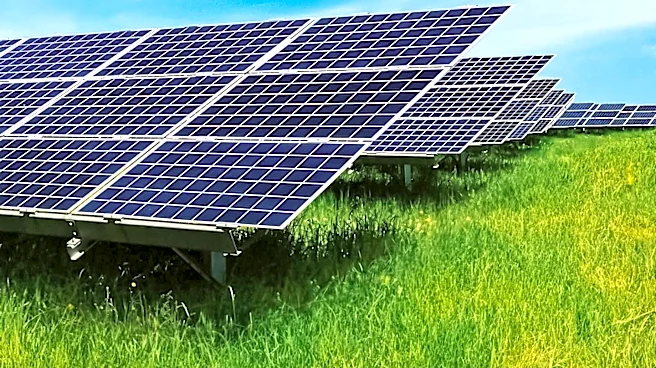
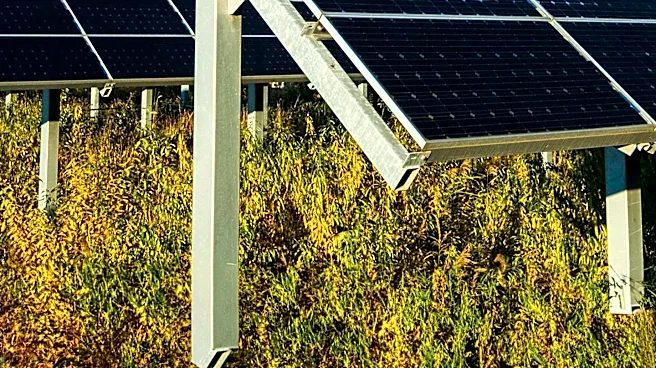
has now been forwarded to Governor Greg Abbott's office for further review. The incentive falls under the Jobs, Energy, Technology and Innovation Act (JETI). Under the proposed agreement, Tesla's qualifying property would be taxed at 50 percent of its value for the portion of the district's tax rate that funds daily operations. This tax break is projected to save Tesla $115.2 million over 20 years, running from 2029 through 2038, with a zero taxable value during the construction phase. The plant would produce photovoltaic solar cells and assemble solar modules on a 3,057-acre site near Richmond, Texas, involving an investment of approximately $1.5 billion in real property and $8.6 billion in equipment.
Why It's Important?
This approval is a critical step in Texas's bid to attract a major clean energy manufacturing facility, potentially creating significant economic benefits for Fort Bend County and the state. Tesla projects the plant would generate 9,712 full-time jobs by 2033, with an annual payroll of about $1.3 billion, and approximately 1,147 construction jobs at its peak. The incentive package is designed to make Texas competitive against other locations vying for Tesla's investment, highlighting the intense competition among states for large-scale industrial projects. While proponents emphasize job creation and economic growth, some residents have raised concerns about environmental impacts, strain on local infrastructure, and the long-term financial implications for homeowners, who might bear increased costs as a result of the tax breaks. The state's commitment to making up the difference in school funding ensures that the school district will not lose operating money, but the broader fiscal impact remains a point of discussion.
What's Next?
The application for the tax incentive will now proceed to Governor Greg Abbott's office for the next stage of state review. The governor's office has 30 days to decide after receiving a favorable recommendation from the comptroller, which has already occurred. If approved by the governor, the agreement would move to execution. However, Tesla has not yet made a final decision on the plant's location, with a choice pending between the Fort Bend County site and another undisclosed location outside of Texas, which reportedly offers a 'very compelling package.' Commercial operations are projected to begin in the first quarter of 2029 if the Fort Bend site is selected. The decision will have significant implications for local employment, economic development, and the future of solar manufacturing in the U.S.
Beyond the Headlines
The Tesla solar plant proposal and the associated tax incentive highlight the complex interplay between economic development, state and local governance, and environmental considerations. The JETI program, which replaced the earlier Chapter 313 program, aims to attract large corporations by offering substantial tax abatements. This strategy reflects a broader trend of states using financial incentives to secure high-value manufacturing and technology investments. However, it also raises questions about the long-term sustainability of such incentives, the equitable distribution of economic benefits, and the potential for shifting tax burdens. The debate over 'Project Crystal Sun' underscores the tension between fostering industrial growth and addressing community concerns regarding infrastructure, environmental impact, and fiscal responsibility. The outcome of Tesla's site selection will serve as a case study for how states balance these competing interests in the pursuit of economic prosperity.