






What's Happening?
Citigroup CEO Jane Fraser has publicly acknowledged that some roles within the company will become redundant due to the integration of artificial intelligence (AI). This statement aligns with similar sentiments from other major financial institutions
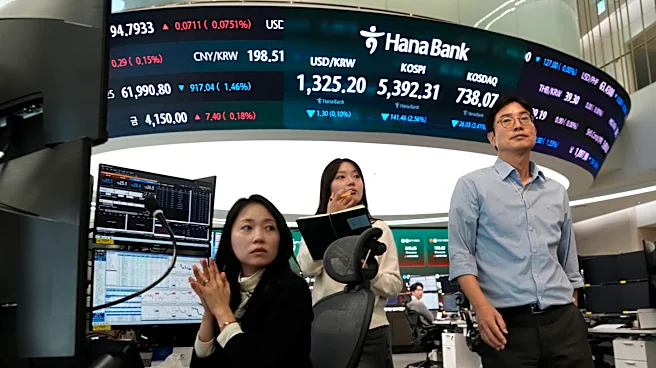
like Goldman Sachs and JPMorgan, whose leaders have also indicated that AI will lead to job elimination. Fraser's comments highlight a broader trend in the financial sector where AI is increasingly being adopted to automate tasks previously performed by human employees. Concurrently, Citigroup has received approval from China's securities regulator to establish a wholly-owned securities unit in the country. This unit, based in Shanghai, will offer services such as stock brokerage, underwriting, research, and principal trading in the domestic market. Fraser noted that this expansion into China's capital markets will help clients raise capital, access investors, and trade locally, contributing to the bank's existing efforts to gain market share in Asia.
Why It's Important?
The statements from Jane Fraser and other banking executives underscore a significant shift in the U.S. financial industry's employment landscape. The widespread adoption of AI is poised to reshape job functions, particularly for entry-level positions like junior analysts, as AI tools take over tasks such as pitch-book building and financial modeling. This could lead to a reduction in the workforce and a demand for new skill sets focused on AI management and development. For Citigroup, the approval to expand its operations in China is strategically important. It allows the bank to tap into one of the world's largest and fastest-growing capital markets, potentially boosting its revenue and market presence in Asia. This move could also intensify competition among international banks vying for a share of China's financial services sector, impacting global financial dynamics and investment flows.
What's Next?
In the short term, Citigroup will need to complete the remaining regulatory and statutory steps before its new Shanghai-based securities unit can commence operations. The bank has not yet provided a start date. The integration of AI is expected to continue, with Fraser noting that AI has already reduced technology vendor spending by 30% year-over-year, and the benefits are anticipated to grow. The company aims for an annual efficiency ratio below 60%. The financial sector will likely see further investment in AI technologies, leading to ongoing discussions about workforce retraining and the creation of new roles to manage AI systems. The expansion into China also suggests a continued focus on international growth for U.S. financial institutions, potentially leading to more cross-border financial services and increased competition in emerging markets.
Beyond the Headlines
The dual developments of AI-driven job displacement and international market expansion highlight the complex challenges and opportunities facing major U.S. banks. The ethical implications of AI in job displacement, particularly for entry-level positions, will likely become a more prominent societal discussion, potentially leading to calls for new educational paradigms and social safety nets. The move into China's domestic capital markets also carries geopolitical implications, as it deepens the financial ties between the U.S. and China. This could influence regulatory frameworks and international trade relations, potentially creating both economic opportunities and new areas of risk. The long-term impact of AI on the nature of work itself, and the evolving role of human expertise in a technologically advanced financial sector, will be a critical area of observation.