




What's Happening?
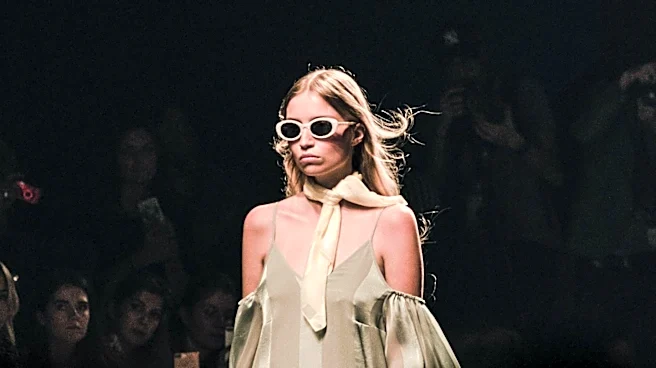
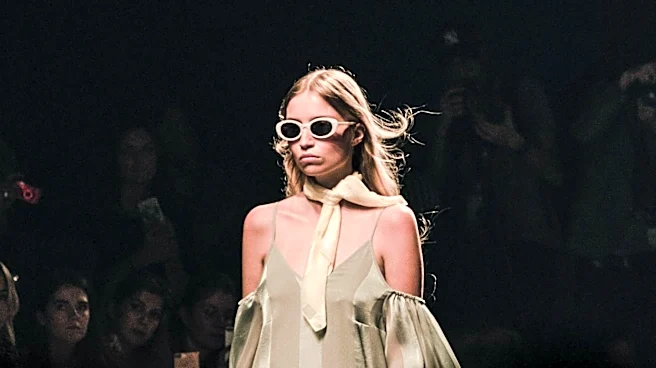
New York Fashion Week (NYFW) is experiencing a significant transformation due to the increasing presence and influence of social media influencers. Historically established in 1943 as a commercial trade show to promote American designers, NYFW has evolved
from featuring high-net-worth celebrities and editors to prominently including influencers. This shift is driven by brands seeking to leverage influencers' ability to reach millions of potential buyers through platforms like Instagram and TikTok, often at a lower cost than traditional advertising. Critics argue that this change dilutes the perceived gravitas of fashion week, as designers are increasingly pressured to create visually impactful garments suitable for five-inch phone screens, prioritizing flashy designs over intricate details. This has led to a focus on 'shock value' and 'bizarre designs' that can go viral, rather than avant-garde innovation. Despite purist objections, many, especially younger audiences, view influencers as a more accessible gateway to the fashion world compared to traditional media.
Why It's Important?
The growing influence of digital creators at NYFW signifies a fundamental shift in the fashion industry's marketing and design strategies. Brands are adapting to a landscape where online engagement and viral content can directly translate into sales, especially as mainstream demand for luxury goods has cooled post-pandemic. This move impacts the creative direction of collections, pushing designers towards aesthetics that are 'digestible and high-contrast' for digital consumption. While this democratizes access to fashion for a broader audience, it also raises concerns about the potential erosion of artistic integrity and craftsmanship in favor of commercial viability and fleeting trends. The emphasis on visual impact for social media may lead to a homogenization of design, where uniqueness is sacrificed for virality, potentially altering the long-term perception of luxury and high fashion.
What's Next?
The trend of integrating influencers into Fashion Week is likely to continue, with brands further refining their strategies to maximize digital reach and engagement. We can anticipate more collaborations between designers and social media personalities, and potentially new formats for showcasing collections that are specifically tailored for online platforms. The debate between fashion purists and proponents of influencer marketing will also persist, prompting ongoing discussions about the balance between art, commerce, and accessibility in the fashion world. Designers may explore innovative ways to blend digital appeal with traditional craftsmanship, seeking to create collections that are both visually striking online and rich in detail and quality offline. The industry will continue to monitor sales data and audience engagement metrics to determine the most effective approaches in this evolving digital landscape.
Beyond the Headlines
This shift at NYFW reflects broader societal changes in how culture and commerce intersect in the digital age. The 'creator economy' has empowered individuals to become significant tastemakers, challenging traditional gatekeepers in industries like fashion. This raises ethical questions about authenticity and the commercialization of personal brand. The focus on 'shock value' and 'bizarre designs' for online virality could also have long-term implications for consumer taste and the appreciation of nuanced design. Furthermore, the accessibility provided by influencers, while beneficial for younger generations, might inadvertently contribute to the fast fashion cycle by promoting rapid trend adoption and disposal. The evolving role of NYFW serves as a microcosm for how digital platforms are reshaping industries, blurring the lines between advertising, entertainment, and artistic expression.