









What's Happening?
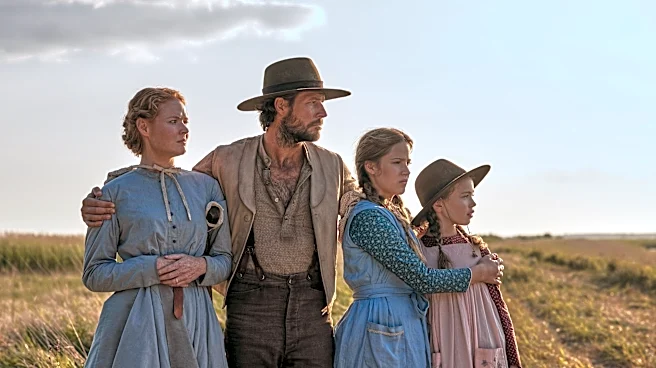
Netflix has launched a new adaptation of the classic 'Little House on the Prairie' series, focusing on the Ingalls family's journey from Wisconsin to Kansas post-Civil War. The premiere episode highlights the physical and emotional challenges faced by
Charles and Caroline Ingalls and their daughters, Mary and Laura, as they navigate life on the frontier. The series, inspired by Laura Ingalls Wilder's books, presents a mix of hope and the harsh realities of pioneering life, including financial struggles, dangerous wildlife, and the emotional toll of isolation. The show also introduces new characters, such as Dr. George Tann, who provides medical assistance and advice to the family, and Mr. John Edwards, a neighbor dealing with personal grief.
Why It's Important?
This adaptation of 'Little House on the Prairie' brings a fresh perspective to a beloved story, highlighting the resilience and determination required to survive in the American frontier. It underscores the historical context of westward expansion and the personal sacrifices made by families like the Ingalls. The series also touches on themes of community and support, as seen in the interactions with Dr. Tann and Mr. Edwards, emphasizing the importance of cooperation and understanding in overcoming adversity. By revisiting these themes, the show offers viewers a chance to reflect on the historical challenges of American pioneers and the enduring spirit of hope and perseverance.
What's Next?
As the series progresses, viewers can expect to see the Ingalls family continue to face and overcome various challenges, both personal and environmental. The show is likely to explore deeper themes of cultural and ethical conflicts, particularly regarding the settlement on Osage land. The development of relationships with neighboring families and the impact of these interactions on the Ingalls' survival will be key storylines. Additionally, the series may delve into the broader implications of westward expansion and its effects on indigenous populations, providing a more nuanced understanding of this period in American history.