





What's Happening?
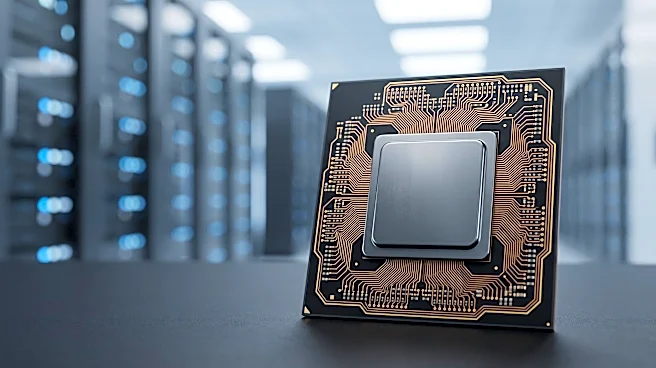
Saia, a startup, is developing an energy-efficient chip designed to run artificial intelligence (AI) directly on devices. This technology utilizes flash memory instead of conventional memory, offering eight times the capacity and consuming four times less
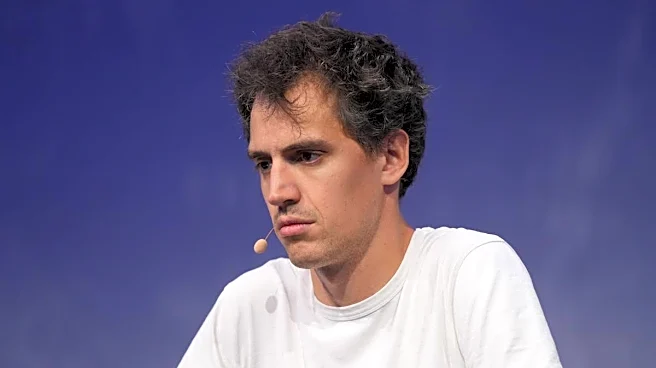
energy than Nvidia Jetson, a leading local AI chip. The company is currently in discussions with Samsung regarding memory integration and plans to produce test chips next year. The goal is to commence mass production of these chips by 2028. Saia's 20-year-old founder, Ayan Govil, successfully secured backing for this project from Mar Hershenson, co-founder of Pear VC, who holds a PhD in circuit design and specializes in semiconductor engineering. This development was highlighted at a PearX Demo Day, showcasing innovative startups in AI and other fields.
Why It's Important?
This development by Saia could significantly impact the U.S. technology sector, particularly in the realm of on-device AI and edge computing. The proposed chip's energy efficiency and increased capacity could lead to more powerful and sustainable AI applications in various devices, from consumer electronics to industrial equipment. By reducing reliance on power-hungry conventional memory and offering a more compact solution, Saia's technology could drive innovation in areas where power consumption and physical space are critical constraints. This could also foster competition within the semiconductor industry, potentially leading to advancements from established players like Nvidia. Furthermore, the successful backing of a young founder by a prominent venture capitalist underscores the U.S.'s robust startup ecosystem and its capacity to support high-risk, high-reward technological ventures.
What's Next?
Saia's immediate next steps involve continuing discussions with Samsung for memory integration and preparing for the production of test chips in the coming year. Successful integration and testing will be crucial milestones before moving towards mass production by 2028. The company will likely seek further funding rounds as it progresses through these development stages, attracting more investors interested in the burgeoning AI hardware market. The performance and adoption of these test chips will determine the commercial viability and market penetration of Saia's technology. Potential reactions from major stakeholders could include increased investment in similar energy-efficient AI solutions from other tech giants, or partnerships and acquisitions as larger companies look to integrate this innovative technology into their offerings.
Beyond the Headlines
The emergence of highly energy-efficient AI chips like Saia's has broader implications for sustainability and accessibility in technology. Reduced energy consumption in AI processing can contribute to lower carbon footprints for data centers and individual devices, aligning with global efforts to combat climate change. Moreover, by enabling powerful AI to run directly on devices, this technology could enhance data privacy and security, as less data would need to be transmitted to cloud servers for processing. This shift towards on-device AI could also democratize access to advanced AI capabilities, making them available in a wider range of products and to a broader user base, potentially fostering new applications and industries. The success of a young founder in a complex hardware domain also highlights the evolving landscape of innovation, where fresh perspectives can challenge established norms.