








What's Happening?
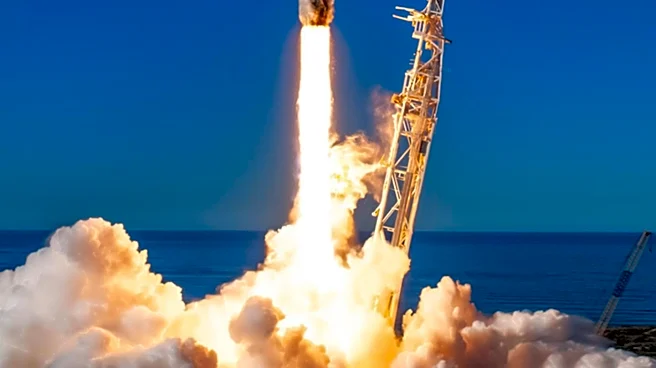
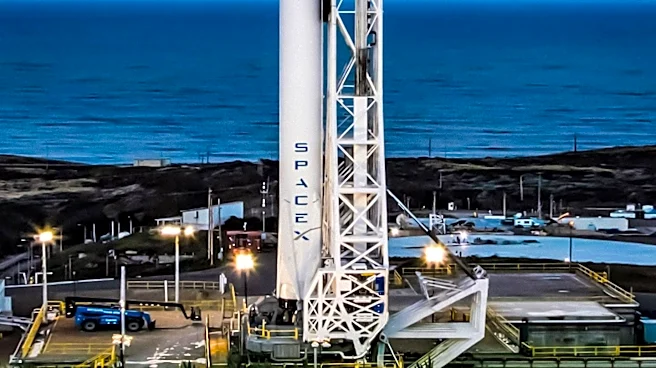
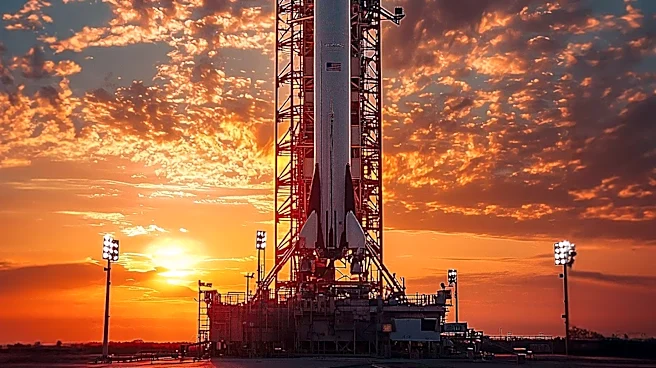
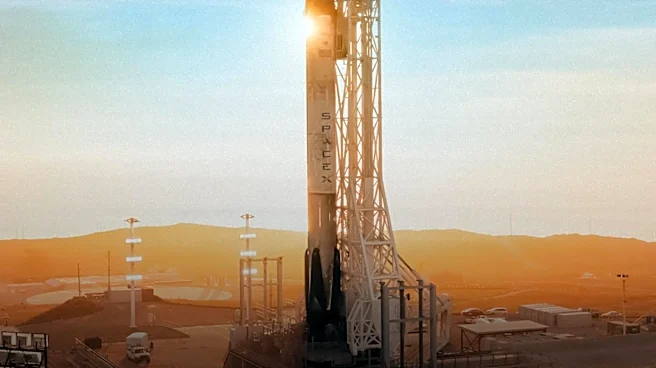
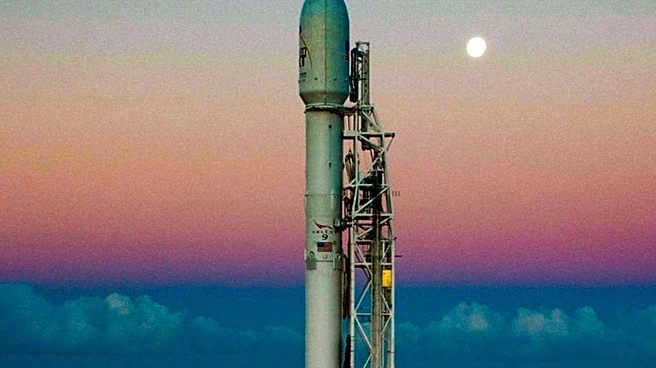
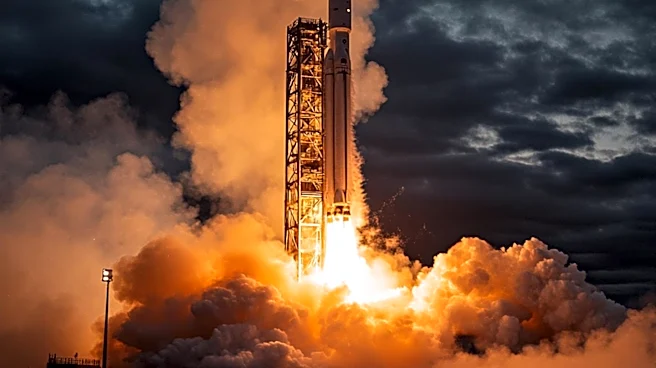
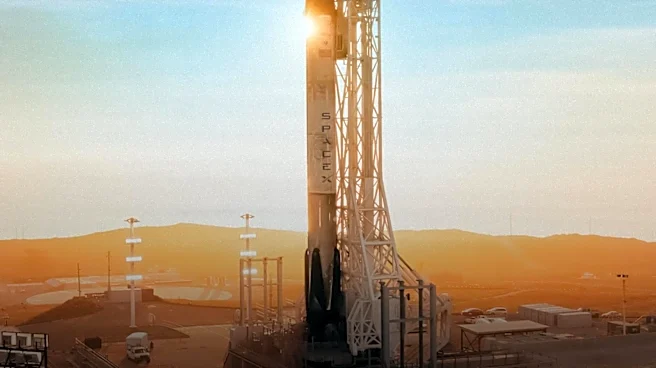
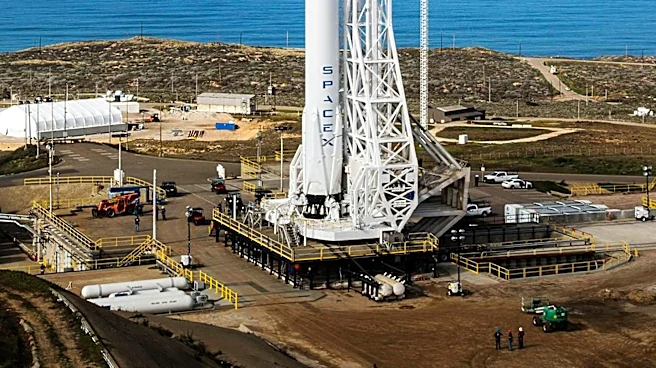
SpaceX successfully launched a Falcon 9 rocket carrying 24 Starlink V2 Mini satellites from Vandenberg Space Force Base in California. The launch occurred a day after an initial attempt was aborted due to an issue during engine ignition. The rocket lifted
off at 7:49 a.m. PDT, following a south-southwesterly trajectory to reach its intended orbit. The mission marked the 85th Falcon 9 launch of the year, with 67 of these supporting the Starlink constellation. The first stage booster, B1082, completed its 23rd flight and successfully landed on the droneship 'Of Course I Still Love You' in the Pacific Ocean.
Why It's Important?
This successful launch is a testament to SpaceX's resilience and capability in overcoming technical challenges. The expansion of the Starlink constellation is crucial for SpaceX's goal of providing global broadband internet coverage, particularly in remote and underserved areas. The mission's success also highlights the reliability and reusability of SpaceX's Falcon 9 rockets, which are central to reducing costs and increasing the frequency of space missions. This launch contributes to the growing infrastructure of satellite internet, which could have significant implications for global connectivity and communication.
What's Next?
SpaceX will continue to focus on expanding its Starlink network, with more launches planned to increase the number of satellites in orbit. The company aims to enhance internet coverage and speed, potentially attracting more customers and increasing revenue. As the constellation grows, regulatory and environmental considerations will become increasingly important, with potential impacts on space traffic management and orbital debris. SpaceX's ongoing efforts to improve rocket reusability and efficiency will also be critical in maintaining its competitive edge in the aerospace industry.