








What's Happening?
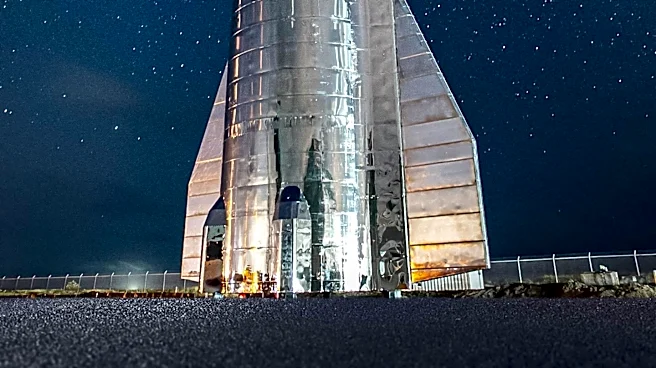
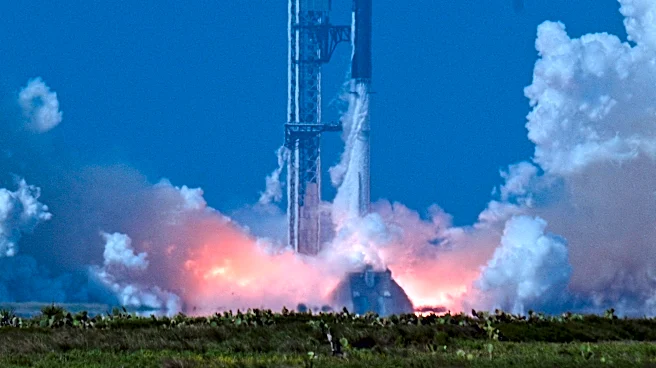
SpaceX is gearing up for the 13th flight test of its Starship rocket, scheduled for July 16, 2026, from Starbase, Texas. This test will feature the third version of Starship, which will carry 20 next-generation Starlink V3 satellites. Six of these satellites are
equipped with cameras to inspect the rocket's heat shield during flight. The Federal Aviation Administration has given the green light for this launch following a mishap investigation into a previous test. The upcoming test aims to demonstrate the full reusability of Starship and the deployment of advanced Starlink satellites. The booster will attempt a boostback burn and an offshore landing burn over the Gulf of Mexico, while the ship will try an in-space Raptor relight and a controlled splashdown in the Indian Ocean.
Why It's Important?
This test is crucial for SpaceX as it seeks to validate the reusability of its Starship rocket, a key component of its future space exploration and satellite deployment plans. The successful deployment of Starlink V3 satellites will enhance SpaceX's broadband internet service, potentially increasing its market share in the satellite internet industry. The improvements made to the Starship's propulsion system, following issues in a previous test, are also significant as they aim to prevent engine loss during flight. This test represents a step forward in SpaceX's goal to establish a reliable and reusable space transportation system, which could have far-reaching implications for the commercial space industry.
What's Next?
If successful, this test could pave the way for more frequent and reliable launches of the Starship rocket, furthering SpaceX's ambitions in space exploration and satellite deployment. The company will likely continue to refine the Starship's design and address any issues that arise during the test. The deployment of Starlink V3 satellites could also lead to an expansion of SpaceX's internet service, potentially reaching more remote and underserved areas. Stakeholders, including government agencies and commercial partners, will be closely monitoring the test's outcome to assess the viability of future missions.