
What's Happening?
The trailer for 'Avengers: Doomsday,' directed by the Russo Brothers, is generating discussion as it tracks to open similarly to 'Spider-Man: Brand New Day' and 'Avengers: Endgame,' with projected debut
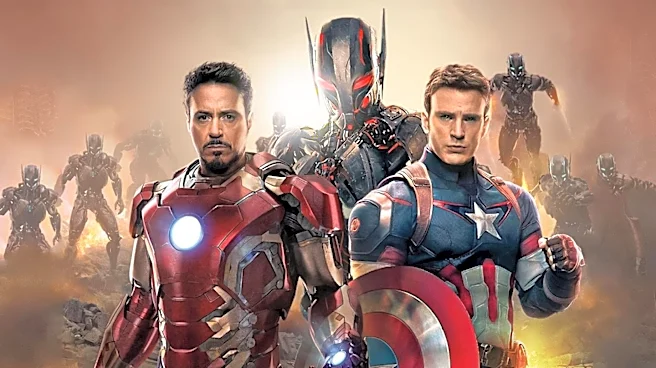
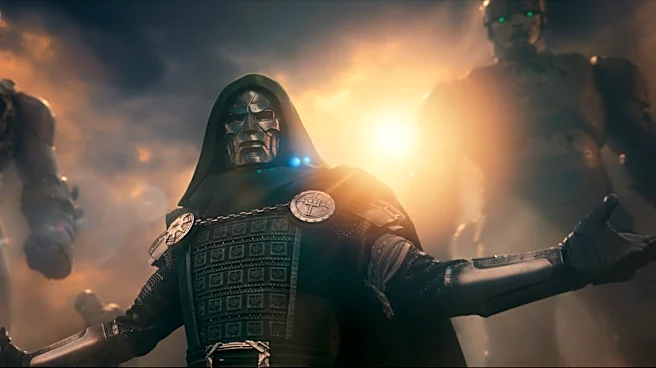
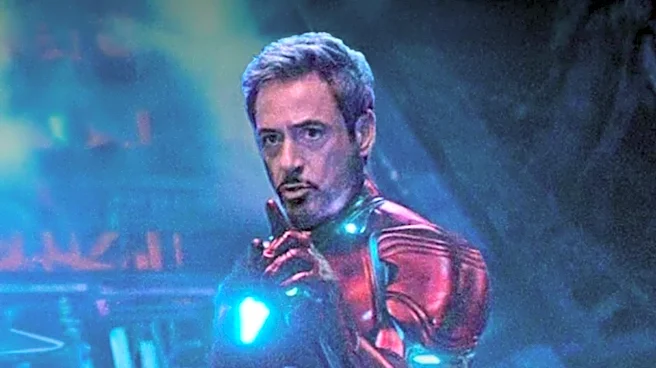
weekends around $360 million. The film is being marketed as a Disney-specific generational nostalgia sequel, aligning with other recent releases like 'Inside Out 2,' 'Zootopia 2,' and 'Avatar: The Way of Water.' A key point of contention is the decision to feature Steve Rogers and Thor as lead characters, alongside Robert Downey Jr. as Doom. This casting choice has led to speculation about whether Marvel and Disney are acknowledging a lack of success in promoting newer characters introduced in the 2020s. The central question revolves around whether 'Avengers: Doomsday' represents a concession to past successes or a strategic effort to reintroduce and solidify Marvel's post-'Endgame' mythology.
Why It's Important?
This development is significant for the entertainment industry, particularly for Disney and Marvel Studios, as it highlights a potential strategic shift in their approach to the Marvel Cinematic Universe (MCU). The reliance on established characters like Steve Rogers and Thor, and the return of Robert Downey Jr., suggests a move to leverage proven fan favorites to ensure box office success. This could indicate a perceived struggle in building new franchises or characters that resonate as strongly with audiences as the original Avengers lineup. For moviegoers, it raises questions about the future direction of the MCU: will it continue to lean on nostalgia, or will 'Doomsday' serve as a bridge to successfully integrate new narratives and heroes? The film's performance will be a critical indicator of whether this strategy effectively addresses the challenge of maintaining audience engagement in a post-'Endgame' era.
What's Next?
The upcoming release of 'Avengers: Doomsday' will be closely watched by industry analysts and fans alike. Its box office performance will likely influence future decisions regarding character development, casting, and overall narrative direction within the Marvel Cinematic Universe. If the film achieves its projected success by leaning on nostalgia, it could encourage Disney and Marvel to continue prioritizing established characters and storylines. Conversely, if the film struggles despite its nostalgic appeal, it might prompt a re-evaluation of their strategy for introducing and developing new characters. The discourse surrounding the trailer suggests that the film's reception will be a crucial barometer for the ongoing evolution of one of Hollywood's most dominant franchises.
Beyond the Headlines
The debate surrounding 'Avengers: Doomsday' touches upon broader themes within the entertainment industry concerning the balance between nostalgia and innovation. In an era where established intellectual properties often dominate the box office, the film's approach reflects a common industry challenge: how to maintain audience interest and financial viability while also evolving narratives and introducing fresh content. The decision to bring back beloved characters and actors, even in new roles, can be seen as a calculated risk to ensure commercial success, but it also raises questions about creative stagnation and the potential for over-reliance on past glories. This trend could have long-term implications for how major studios approach franchise management, character development, and the cultivation of new talent within their cinematic universes.