







What's Happening?
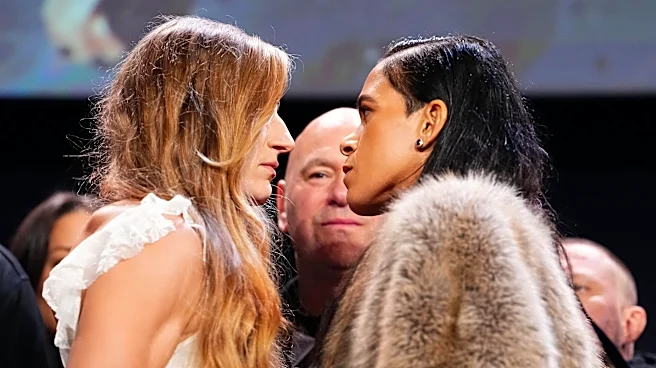
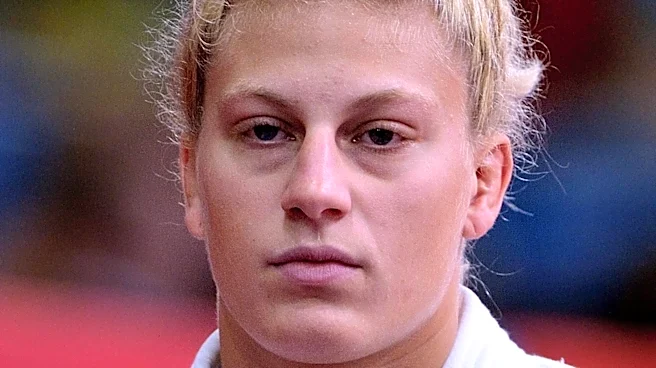
Following Kayla Harrison's weigh-in for UFC 334, where she successfully made the bantamweight limit of 135 pounds, fans and commentators have expressed concerns about the visible difficulty of her weight cut. Harrison, a two-time Olympic gold medalist
and former lightweight competitor, has openly stated the challenges of cutting to 135 pounds. Her appearance at the weigh-ins prompted a significant reaction from the public, with many suggesting that the UFC should reinstate the women's featherweight division (145 pounds) to accommodate fighters like Harrison. During a press conference, Harrison herself proposed that if she defeats Amanda Nunes, she would offer an immediate rematch, but only in the featherweight division, which the UFC previously dissolved after Amanda Nunes retired and vacated her belts. This sentiment has garnered considerable support from the fanbase.
Why It's Important?
The discussion surrounding Kayla Harrison's weight cut and the potential return of the women's featherweight division is significant for several reasons. Firstly, it highlights ongoing concerns about fighter health and safety in MMA, particularly regarding extreme weight cutting practices. The physical toll of such cuts can impact performance and long-term well-being. Secondly, the reintroduction of a featherweight division could create more opportunities for female fighters who naturally compete at higher weights, potentially increasing the talent pool and competitive depth in women's MMA. This could lead to more compelling matchups and expand the sport's appeal. Lastly, the strong fan reaction indicates a demand for more diverse weight classes in women's MMA, suggesting that the UFC's current structure may not fully cater to the range of athletic builds and preferences among its female roster.
What's Next?
The immediate future hinges on the outcome of Kayla Harrison's fight at UFC 334 and the subsequent discussions with the UFC. If Harrison performs well but continues to express difficulty with the bantamweight cut, the pressure on the UFC to consider reinstating the featherweight division will likely intensify. Harrison has explicitly stated that if the UFC does not create a 145-pound division, she might consider stepping away from the sport, indicating the seriousness of her stance. The UFC will need to weigh the commercial viability of a new division against fighter welfare and fan demand. A potential rematch between Harrison and Nunes at featherweight, as proposed by Harrison, could serve as a high-profile catalyst for such a change, demonstrating the competitive potential of a revived division.
Beyond the Headlines
The debate over the women's featherweight division extends beyond immediate fight implications, touching upon broader issues of athletic equity and career longevity in combat sports. For athletes like Kayla Harrison, who have achieved elite status in other disciplines, the transition to MMA can be hampered by restrictive weight class options. The absence of a suitable weight class can force fighters into unhealthy weight cuts, potentially shortening careers or diminishing performance. This situation also raises questions about the UFC's commitment to developing all segments of its roster, particularly in women's divisions. A more inclusive range of weight classes could attract a wider array of talent, fostering greater competition and innovation within the sport, and ultimately enhancing the overall product for fans while prioritizing athlete health.