




What's Happening?
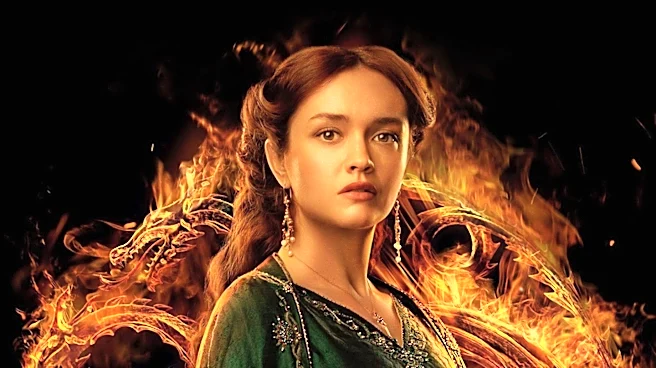
Actress Olivia Cooke, known for her roles as Alicent Hightower in 'House of the Dragon' and Sid Baker in 'Slow Horses,' recently discussed the distinct working environments of the two popular series. Cooke highlighted the improvisational nature and looser
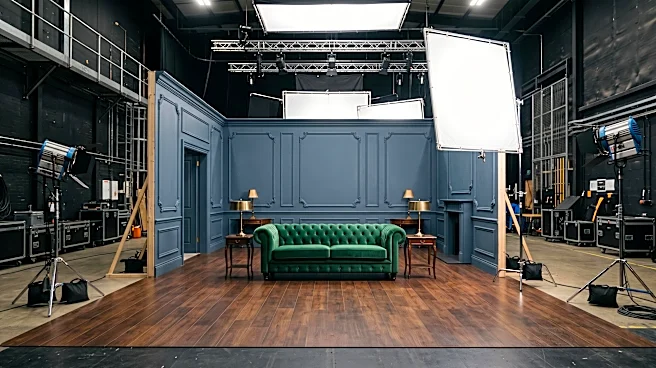
structure of 'Slow Horses,' which allows for more off-the-cuff energy. In contrast, she described the set of 'House of the Dragon' as significantly more structured, rehearsed, and premeditated. She noted that the two productions are at opposite ends of the spectrum in terms of style, tone, and performance, as well as the overall workplace atmosphere. Cooke also shared her character Alicent's perspective, suggesting that Alicent would be jealous of Sid's inner confidence, assuredness, autonomy, and freedom, qualities that Alicent has seen crumble within herself over the years.
Why It's Important?
Olivia Cooke's insights into the production differences between 'House of the Dragon' and 'Slow Horses' offer a valuable glimpse into the varied approaches within the television industry. Her comments underscore how different genres and production scales necessitate distinct creative processes, impacting everything from script adherence to actor autonomy. For the entertainment industry, this highlights the adaptability required of actors and crew members working across diverse projects. The contrast between a highly structured fantasy epic and a more flexible spy thriller also informs discussions about creative control versus collaborative freedom in television production. Furthermore, Cooke's personal reflection on her characters' traits, particularly Alicent's crumbling resolve compared to Sid's confidence, provides a deeper understanding of character development and the psychological impact of roles on actors, which can influence casting decisions and character writing in future productions. This perspective is crucial for understanding the nuances of performance and production in high-profile series.
What's Next?
As both 'House of the Dragon' and 'Slow Horses' continue their runs, Olivia Cooke's experiences will likely inform her future career choices and the types of projects she pursues. Her preference for the improvisational freedom of 'Slow Horses' versus the structured environment of 'House of the Dragon' could influence her selection of roles, potentially leading her towards projects that offer more creative input. For the respective series, these behind-the-scenes insights might subtly influence how future seasons are approached, though major production changes are unlikely given their established success. The ongoing success of both shows, with their distinct production styles, will continue to provide case studies for aspiring filmmakers and actors on the diverse demands of the industry. Cooke's comments also contribute to the broader discourse on actor-director collaboration and the balance between a showrunner's vision and an actor's interpretation, which remains a critical aspect of television production.
Beyond the Headlines
Olivia Cooke's reflections extend beyond mere production logistics, touching upon the psychological and artistic demands placed on actors. Her observation that Alicent Hightower's inner resolve has 'crumbled' over the years speaks to the profound character arcs actors embody and the emotional toll such roles can take. This highlights the often-overlooked aspect of an actor's craft: not just delivering lines, but deeply internalizing and portraying complex emotional journeys. The contrast between the two sets also implicitly raises questions about the 'auteur' theory in television versus a more collaborative, ensemble-driven approach. While 'House of the Dragon' might lean towards a singular creative vision, 'Slow Horses' appears to foster a more fluid, actor-driven environment. This distinction can influence the overall creative output and the authenticity perceived by audiences. Ultimately, Cooke's insights offer a valuable perspective on the multifaceted nature of acting and production in the modern television landscape, emphasizing the blend of discipline, adaptability, and emotional intelligence required for success.