










What's Happening?
The National Gallery of Art in Washington, D.C., is renowned for its extensive collection of American and international art. Recently, the gallery has been involved in a significant exhibition in Florence, Italy, showcasing the works of Mark Rothko, a prominent
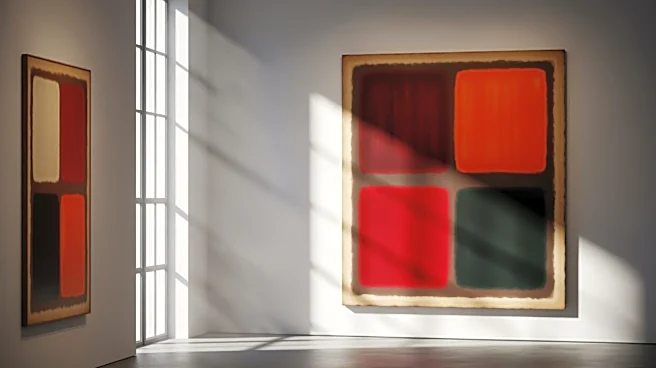
figure in U.S. abstract expressionism. The exhibition, titled 'Rothko in Florence,' is curated by Rothko's son, Christopher, and independent curator Elena Geuna. It explores the profound impact of Renaissance art on Rothko's work, highlighting the spiritual and contemplative nature of his paintings. The exhibition is held at Palazzo Strozzi and other sites, featuring juxtapositions of Rothko's works with Renaissance frescoes, emphasizing a shared visual language and spiritual rationale.
Why It's Important?
This exhibition underscores the global influence of American art and its dialogue with historical European art movements. By highlighting Rothko's connection to Renaissance art, the exhibition offers a deeper understanding of his work's spiritual dimensions, which resonate with audiences seeking meaning beyond the visual. This event not only elevates Rothko's status in the art world but also strengthens cultural ties between the U.S. and Europe. It provides an opportunity for art enthusiasts to experience Rothko's work in a new context, potentially attracting a broader audience to American abstract expressionism.
What's Next?
The exhibition may inspire further collaborations between American and European art institutions, fostering cross-cultural exchanges and new interpretations of modern art. It could also lead to increased interest in Rothko's work, prompting more exhibitions and scholarly research. As audiences engage with the spiritual aspects of Rothko's paintings, there may be a renewed appreciation for abstract expressionism and its relevance in contemporary art discussions.
Beyond the Headlines
The exhibition highlights the enduring power of art to transcend cultural and temporal boundaries, offering a space for reflection and spiritual engagement. It challenges viewers to consider the role of art in personal and collective identity, encouraging a deeper exploration of the emotional and philosophical dimensions of artistic expression.