




What's Happening?
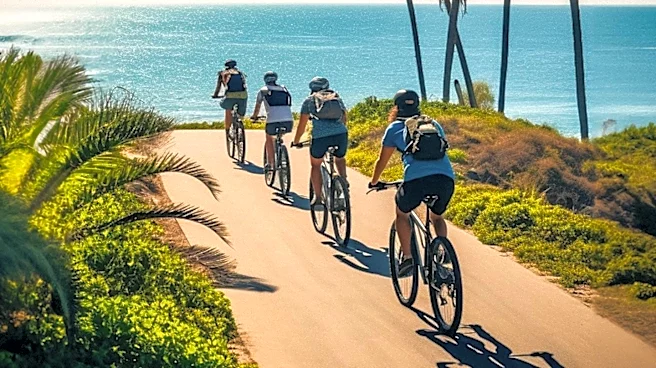
Cycling holidays are being promoted as an ideal method for 'slow travel' in Europe, offering a more immersive and connected way to experience the continent. Unlike faster modes of transport, cycling allows travelers to cover less distance daily but notice
more details, such as small villages, local cafes, and scenic landscapes. This flexibility enables spontaneous stops and changes in plans, fostering a deeper connection with the surroundings. Europe provides a diverse range of cycling routes, from river paths in Germany and Austria to vineyards in France, and flatter terrains in the Netherlands and Belgium. Cycling holidays can be tailored to individual preferences, with options for varying distances, terrains, and levels of support, including the use of e-bikes to accommodate different fitness levels.
Why It's Important?
The rise of cycling holidays as a 'slow travel' option signifies a growing demand for experiential and sustainable tourism. This trend impacts the travel industry by encouraging the development of specialized cycling tour packages, bike rental services, and accommodations catering to cyclists. It also promotes local economies by directing travelers to smaller towns and rural areas, where they are more likely to engage with local businesses and cultures. For individuals, cycling offers health benefits and a unique perspective on destinations, moving beyond typical tourist routes. The accessibility of e-bikes further broadens the appeal of cycling holidays, making them viable for a wider demographic, including those who might not consider themselves experienced cyclists. This shift contributes to a more environmentally friendly travel model by reducing reliance on carbon-intensive transportation.
What's Next?
The increasing popularity of cycling holidays suggests continued growth in this niche travel market. Tour operators are likely to expand their offerings, providing more diverse routes, customizable itineraries, and enhanced support services, such as luggage transport and pre-booked accommodations. Destinations across Europe may invest in improving cycling infrastructure, including dedicated bike paths and cyclist-friendly amenities, to attract this growing segment of travelers. There could also be a greater emphasis on promoting the health and environmental benefits of cycling tourism. As 'slow travel' gains traction, cycling holidays are poised to become a more mainstream option for those seeking authentic and sustainable travel experiences.
Beyond the Headlines
Cycling as a mode of 'slow travel' embodies a philosophy of mindful engagement with the environment and a rejection of hurried, superficial tourism. It encourages a deeper appreciation for the journey itself, not just the destination. This approach can foster a sense of personal achievement and connection with nature, promoting mental and physical well-being. Culturally, it allows for more organic interactions with local communities, breaking down barriers between tourists and residents. The emphasis on flexibility and spontaneity inherent in cycling travel also challenges the rigid, pre-planned itineraries often associated with modern tourism, promoting a more adaptable and open-minded approach to exploration. This movement aligns with broader trends towards sustainable living and a desire for more authentic, less commercialized experiences.