







What's Happening?
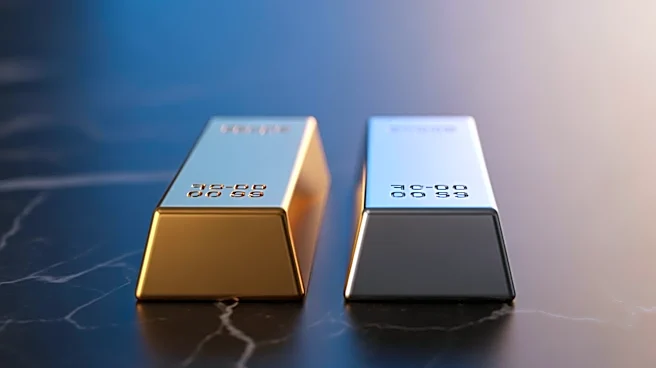
Gold and silver prices have shown an upward trend in early U.S. trading, with spot gold trading near $4,343.20 an ounce, up by 0.81%, and spot silver at $70.47, up by 0.86%. This increase follows a tentative U.S.-Iran deal aimed at ending their conflict
and reopening the Strait of Hormuz, which has led to a decrease in crude oil prices and eased inflation fears. The Federal Reserve's upcoming meeting is also influencing market dynamics, as traders position themselves in anticipation of potential rate changes. The easing of Treasury yields and the decline in oil prices have supported the rise in precious metals, as the market adjusts to the new geopolitical landscape.
Why It's Important?
The rise in gold and silver prices is significant as it reflects broader economic and geopolitical shifts. The U.S.-Iran deal has reduced immediate war risks, impacting oil prices and inflation expectations, which in turn affects the precious metals market. Lower oil prices and softer yields are beneficial for rate-sensitive trades, including gold and silver. This development is also crucial for industries reliant on these metals, such as technology and manufacturing, as it may influence production costs and investment strategies. Additionally, the Federal Reserve's decisions on interest rates could further impact market stability and investor confidence.
What's Next?
The Federal Reserve's meeting, concluding soon, will provide further insights into the U.S. economic outlook and potential interest rate adjustments. The outcome of the U.S.-Iran negotiations will also play a critical role in shaping future market conditions. Investors and industries will be closely monitoring these developments to adjust their strategies accordingly. The potential for continued geopolitical tensions and economic policy changes will likely keep markets volatile in the near term.