





What's Happening?
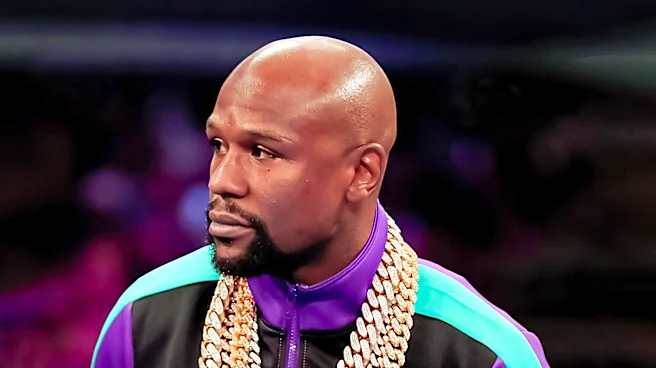
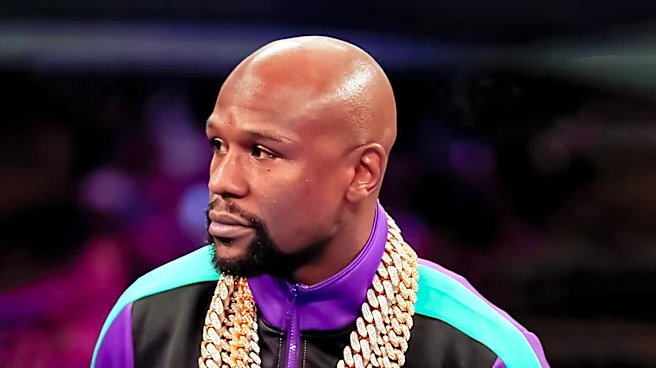
Floyd Mayweather Jr., a renowned boxer, has maintained impressive physical attributes throughout his career, which have been crucial to his success. Standing at 5 feet 8 inches (173 cm) tall, Mayweather's height has provided him with a reach advantage
in the ring. His weight has varied, ranging from 130 pounds (59 kg) in his early career to 147 pounds (66.7 kg) in later years, with an average weight of around 143 pounds (64.9 kg). Despite a Body Mass Index (BMI) of 25, which the World Health Organization classifies as 'overweight,' Mayweather has consistently maintained a lean and muscular build. His rigorous training regimen includes 3-4 hours of daily cardio exercises like running, jumping rope, and cycling, alongside strength training focusing on squats, deadlifts, and bench presses. Flexibility exercises such as stretching and yoga, along with regular massages and physical therapy, are also integral to his routine for recovery and injury prevention.
Why It's Important?
Mayweather's meticulous approach to his physical conditioning highlights the critical role that precise physical attributes and dedicated training play in elite boxing performance. His ability to adapt his weight across different classes allowed him to strategically exploit opponents' strengths and weaknesses, demonstrating the tactical importance of physical versatility in combat sports. The detailed breakdown of his training regimen provides insight into the demands of maintaining peak athletic condition over a two-decade career, setting a benchmark for aspiring athletes. Furthermore, his success, despite a BMI that technically falls into the 'overweight' category, challenges conventional interpretations of health metrics in the context of highly specialized athletic builds, emphasizing that general health guidelines may not always directly apply to elite athletes with dense muscle mass. His sustained dominance underscores the effectiveness of his comprehensive physical preparation.
What's Next?
While Floyd Mayweather Jr. has largely retired from professional boxing, the detailed insights into his physical attributes and training methods will continue to influence future generations of boxers and athletes. His regimen serves as a case study for sports scientists, coaches, and trainers looking to optimize performance and longevity in high-impact sports. The emphasis on a balanced approach combining cardio, strength, and flexibility, along with recovery, will likely remain a cornerstone of elite athletic preparation. Future discussions in sports science may further explore how athletes like Mayweather maintain peak performance despite BMI classifications that might suggest otherwise, potentially leading to more nuanced understandings of athletic body composition and health. His legacy will continue to inspire rigorous training and strategic physical development in boxing.
Beyond the Headlines
Beyond the immediate context of boxing, Mayweather's career and physical regimen offer broader lessons in discipline, strategic planning, and the pursuit of excellence. His unwavering commitment to his physical craft reflects a mindset that transcends sports, applicable to any field requiring sustained high performance. The detailed account of his training also subtly highlights the significant investment, both personal and financial, required to maintain an elite athletic career, including access to top-tier trainers, nutritionists, and physical therapists. This level of dedication underscores the professionalization of modern sports, where every physical detail is meticulously managed. His story also contributes to the ongoing conversation about body image and health metrics, demonstrating that 'healthy' and 'optimal' can be highly context-dependent, especially for individuals operating at the pinnacle of physical performance.