


What's Happening?
Actress Alison Brie, known for her roles in 'Mad Men,' 'Community,' and 'Masters Of The Universe,' is maintaining significant strength in her 40s through a dedicated workout routine that includes strength training and advanced techniques. Working with
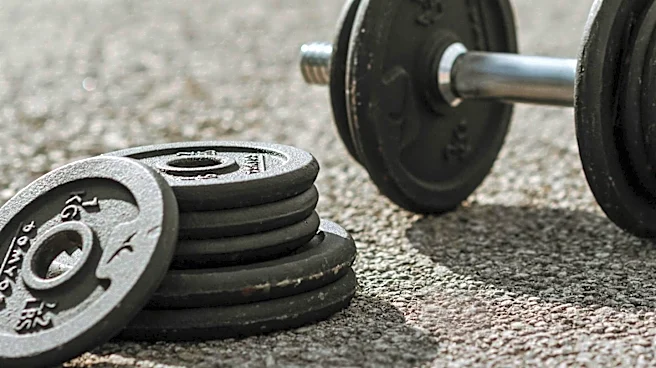
trainer Jason Walsh, Brie's regimen features weighted pull-ups with 45lb plates. A key element of her training involves isometric holds, where muscles are contracted forcefully without joint movement. This technique, as explained by Walsh, recruits the nervous system at a high rate, allowing for increased strength without necessarily increasing muscle size. For instance, Brie performs isometric holds in a Zercher squat position, pushing against a fixed bar, before executing Zercher squats with a barbell. This method is designed to make each session more effective by building structural stability and overcoming strength plateaus, particularly by targeting and strengthening specific angles of movement where individuals typically struggle.
Why It's Important?
The adoption of advanced strength training techniques like isometric holds by public figures such as Alison Brie highlights a growing trend in fitness that emphasizes functional strength and injury prevention, particularly as individuals age. This approach can influence public perception of fitness, shifting focus from purely aesthetic goals to long-term physical health and performance. For the fitness industry, the visibility of such methods through celebrity endorsement can drive interest in specialized training programs and equipment. Personal trainers and strength and conditioning coaches, like Mark Harris mentioned in the source, can leverage this increased awareness to educate more people on the benefits of isometric training, which include significant increases in time under tension without excessive wear and tear on joints. This could lead to broader adoption of these techniques among the general population, promoting more sustainable and effective workout routines.
What's Next?
As more individuals, inspired by figures like Alison Brie, seek to incorporate advanced training methods into their routines, there will likely be an increased demand for qualified personal trainers and specialized fitness programs focusing on techniques like isometric holds. Fitness professionals may develop more accessible home workout routines that integrate these methods, as suggested by Mark Harris, to cater to a wider audience. The fitness equipment market could also see a rise in products designed to facilitate isometric exercises. Furthermore, the continued emphasis on strength training and functional fitness by celebrities may encourage ongoing research into the long-term benefits and optimal application of these techniques, potentially leading to new insights and best practices in exercise science. This trend could also foster a greater appreciation for the role of professional guidance in achieving fitness goals safely and effectively.
Beyond the Headlines
Beyond the immediate fitness benefits, Alison Brie's public embrace of rigorous strength training and isometric holds challenges conventional narratives about aging and physical capability, particularly for women in the entertainment industry. It promotes a message of sustained strength and vitality in one's 40s and beyond, moving away from age-related limitations. This shift can have broader cultural implications, encouraging a more holistic view of health that values strength and functional movement over superficial appearances. Ethically, it underscores the importance of proper training and professional guidance to avoid injury, especially when attempting advanced techniques. The emphasis on 'getting strong without getting bigger' also reflects a nuanced understanding of fitness goals, suggesting that strength and performance can be prioritized independently of muscle hypertrophy, which may resonate with a diverse range of individuals seeking effective and sustainable fitness journeys.