





What's Happening?
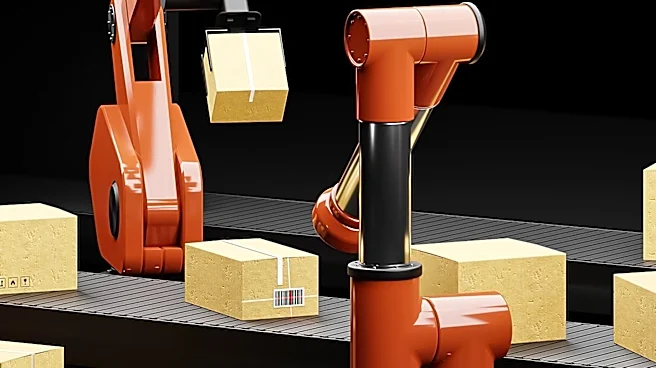
Cargill, a U.S.-based meat company, is investing 2 billion Thai Baht ($60 million) to expand and automate its cooked poultry operations in Thailand. This investment includes a new automated production line for cooked chicken products at its Saraburi facility,
expected to be completed in 2028. Additionally, a 30,000-metric-ton grain silo for chicken feed is being built at Cargill’s Nakhon Ratchasima facility, with completion anticipated by December. The company plans to integrate advanced technologies, including AI, to optimize production processes, reduce costs, and enhance food quality and safety management over the next two years. This strategic move is driven by increasing global demand for high-quality protein and aims to strengthen supply chain resilience. From Thailand, Cargill exports cooked poultry products to various Asian destinations, Europe, and North America.
Why It's Important?
This significant investment by Cargill underscores a broader trend in the global food industry towards automation and artificial intelligence to meet escalating protein demand and improve operational efficiency. For the U.S. market, this means a more robust and potentially cost-effective supply of cooked poultry products from a major American food corporation. The integration of AI in data processing and quality control could set new industry standards, influencing other U.S. and international food producers to adopt similar technologies. While the investment is in Thailand, the enhanced production capabilities and optimized supply chain will ultimately benefit consumers and foodservice providers in North America by ensuring a consistent and high-quality product flow. This also highlights the strategic importance of international production hubs for U.S. companies in maintaining global market competitiveness.
What's Next?
Cargill's Saraburi facility's new automated production line is slated for completion in 2028, while the grain silo in Nakhon Ratchasima is expected to be finished by December. Over the next two years, AI will be deployed for faster and more accurate decision-making, as well as for food quality and safety management. This investment is projected to increase cooked poultry volume to approximately 160,000 metric tons, generating an additional 25 billion Thai Baht in export revenue and creating 300 local jobs. The company anticipates that these enhancements will improve the procurement of domestic raw materials and services, including feed ingredients, grains, seasonings, and packaging. The success of this initiative could serve as a model for future investments in automation and AI across Cargill's global operations and potentially influence other major food producers.
Beyond the Headlines
Cargill's investment reflects a strategic pivot towards leveraging advanced technology to address complex challenges in the food supply chain, such as global demand fluctuations, labor costs, and the need for stringent quality control. The deployment of AI in food production raises questions about the future of labor in the agricultural sector, potentially shifting job requirements from manual tasks to oversight and technical roles. Furthermore, the emphasis on supply chain resilience and food safety through technology could influence regulatory frameworks and consumer expectations regarding food production transparency and quality. This move also highlights the increasing interconnectedness of global food systems, where investments in one region can have far-reaching implications for markets worldwide, including the U.S., by setting new benchmarks for efficiency and sustainability in large-scale food processing.