









What's Happening?
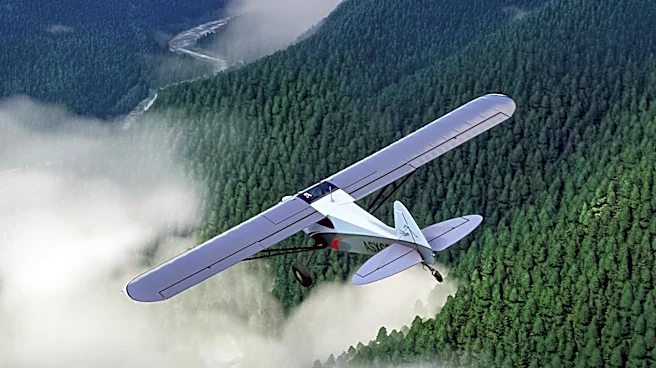
A pilot flying a CubCrafters NXCub navigated challenging terrain to land at the 45 Ranch, a remote airstrip located in the Owyhee Canyonlands of Idaho. The pilot described flying over parched high desert in Oregon and southwestern Idaho before approaching
the vibrant turf runway. The landing involved a complex pattern, extending three miles downwind to find a suitable entry point into a deep canyon, followed by a descent through thermals and a narrow funnel along a riverbed. The final approach required pointing the aircraft directly at a towering cliff before a sharp 45-degree turn to align with the 2,700-foot-long turf runway. The 45 Ranch is a cornerstone of the Jim Richmond Backcountry Aviation Foundation (JRBAF), a nonprofit established in 2023 to support the adventure flying community by acquiring private airstrips and opening them for public use.
Why It's Important?
This account highlights the growing interest and infrastructure supporting backcountry aviation in the United States. The establishment of organizations like the Jim Richmond Backcountry Aviation Foundation (JRBAF) signifies a concerted effort to preserve and expand access to remote airstrips for recreational pilots. This is crucial for maintaining the freedom to fly in diverse environments and fostering skills in challenging aviation conditions. The availability of such airstrips, complete with amenities like camping, water, and Wi-Fi, enhances the appeal of adventure flying and supports local economies in remote areas through increased tourism. Furthermore, these initiatives contribute to the broader aviation community by providing unique training opportunities and promoting responsible use of natural landscapes for recreational purposes.
What's Next?
The Jim Richmond Backcountry Aviation Foundation (JRBAF) plans to continue acquiring private airstrips across the country to expand its network beyond the current three-airfield system, anchored by the 45 Ranch. This expansion will likely increase opportunities for backcountry pilots to access remote areas for recreational flying, camping, and outdoor activities. The foundation's model, which complements the work of the Recreational Aviation Foundation (RAF), suggests a growing trend in private organizations taking active roles in preserving and enhancing aviation infrastructure. Future developments may include more partnerships between such foundations and local communities, further integrating aviation tourism into regional development plans and promoting the unique aspects of backcountry flying.
Beyond the Headlines
The narrative of flying into remote airstrips like the 45 Ranch touches upon deeper themes of conservation, access to wilderness, and the evolving relationship between technology and nature. Backcountry aviation allows individuals to experience pristine natural environments, but it also necessitates a delicate balance between recreational use and ecological preservation. Organizations like JRBAF play a critical role in managing this balance, ensuring that increased access does not lead to environmental degradation. This movement also reflects a broader cultural desire for adventure and escape from urban environments, facilitated by specialized aircraft like the CubCrafters NXCub. The long-term implications include the potential for these remote airstrips to become vital hubs for eco-tourism, scientific research, and emergency services in otherwise inaccessible regions, fostering a unique blend of recreation, conservation, and utility.