





What's Happening?
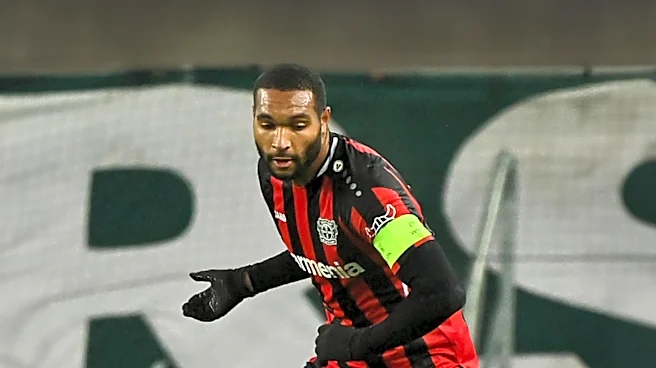
Bayer Leverkusen, a German football club owned by pharmaceutical company Bayer AG, is expanding its influence beyond on-field achievements to actively shape the governance of European football. Club executives Fernando Carro and Simon Rolfes recently
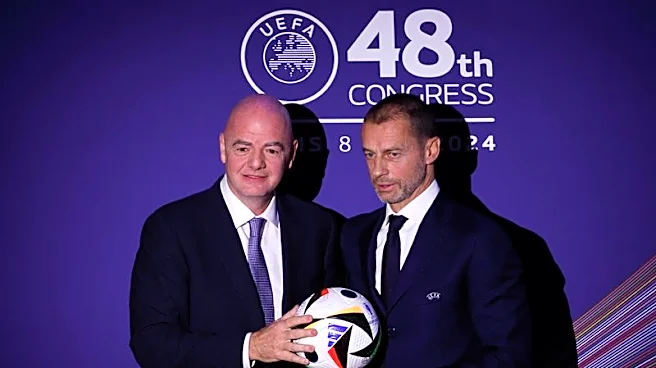
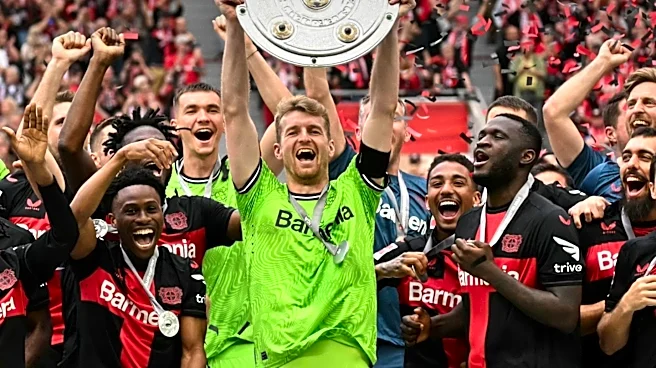
attended the 33rd General Assembly of the European Football Clubs (EFC) in Copenhagen. This assembly, representing 920 men's and women's clubs across 55 territories, is a key forum for discussing the future direction of European club football. Carro, who has been part of the EFC's executive leadership since 2021 and represents Bundesliga interests, is also a member of UEFA's Club Competitions Committee and the UC3 Board of Administration. This involvement places Leverkusen directly within the structures responsible for European club competitions, allowing them to contribute to decisions regarding governance, marketing, and financing. The club's increased participation in these discussions follows their recent success, including winning the Bundesliga and DFB-Pokal in 2024, which has elevated their sporting standing.
Why It's Important?
Bayer Leverkusen's proactive engagement in European football governance signifies a shift in influence within the sport. Traditionally, the power to shape policies and financial structures has often resided with a select group of historically dominant clubs. Leverkusen's presence and active role in bodies like the EFC and UEFA committees indicate a broader distribution of decision-making power, potentially allowing clubs outside the traditional 'superpowers' to have a more significant voice. This is particularly important as the commercial landscape of European football continues to grow, with annual UEFA club-competition revenue projected to exceed €5 billion per season for the 2027-31 commercial cycle. The discussions in Copenhagen, including the unanimous approval of a governance reform for the 2027-31 period that will create a 33-member voting executive board with reserved places for Associated Member Clubs, highlight a move towards greater transparency and participation. This could lead to more equitable distribution of wealth and opportunities, benefiting a wider range of clubs and potentially fostering a more competitive and inclusive European football ecosystem.
What's Next?
Following the governance reforms approved by the EFC, Bayer Leverkusen and other clubs will likely continue to advocate for increased transparency and broader participation in European football's decision-making processes. The creation of a 33-member voting executive board with reserved places for Associated Member Clubs suggests that more diverse perspectives will be brought to the table. Leverkusen's executives, with their extended contracts, are positioned for continued long-term involvement in these discussions. Their ongoing presence in UEFA and FIFA committees will allow them to influence how the growing commercial revenues are distributed and how competitions are structured. This sustained engagement could lead to further changes in the governance model, potentially impacting future competition formats, financial fair play regulations, and the overall strategic direction of European club football. The club's efforts to secure a seat at the table are expected to continue, aiming to ensure that the interests of a wider array of clubs are represented as the sport evolves.
Beyond the Headlines
Bayer Leverkusen's strategic move into European football governance reflects a deeper trend of professional sports organizations seeking to exert influence beyond their immediate competitive arenas. This engagement highlights the increasing intertwining of sports, business, and politics on an international scale. The club's corporate ownership by Bayer AG provides a unique perspective, potentially bringing a more structured, business-oriented approach to governance discussions. This could lead to a greater emphasis on long-term financial stability, sustainable growth models, and transparent operational practices within European football. Furthermore, the push for broader representation in governance bodies, as championed by Leverkusen, could challenge the traditional hierarchies and power dynamics that have long characterized European football. This could foster a more democratic and inclusive environment, potentially leading to a re-evaluation of how revenue is shared, how smaller clubs are supported, and how the sport addresses broader societal issues, moving beyond purely competitive concerns to embrace a more holistic vision for its future.